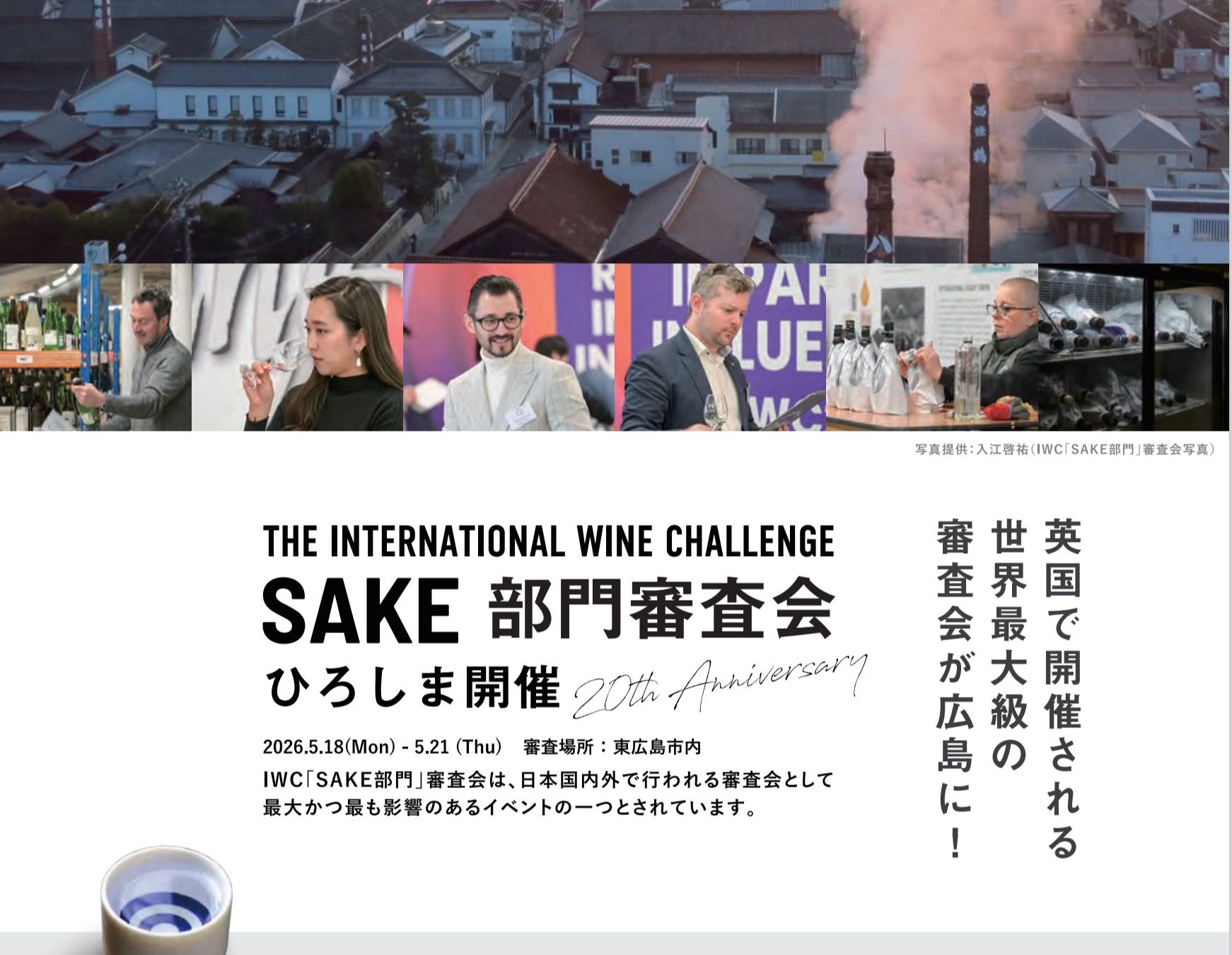
May in Hiroshima is going to be all about sake. The IWC (International Wine Challenge) SAKE division's move to Higashi-Hiroshima was announced earlier, but the official website has now published the full schedule of events. It's shaping up to be more than a competition — it's a week-long sake immersion.
A Week That Starts at a Shrine
Here's how the week unfolds.
May 17 (Sunday): a welcome reception at Matsuo Shrine and on the grounds of Kamotsuru Brewery. Opening the event at a shrine dedicated to the god of sake, inside one of Saijo's most storied breweries — that's a statement.
May 18 (Monday) through May 21 (Thursday): four days of judging at the Higashi-Hiroshima Arts and Culture Hall Kurara. Judges from over a dozen countries will blind-taste more than 1,000 entries.
May 21 also includes a tour of Hiroshima Prefecture for the judges — brewery visits and local sightseeing.
May 22 (Friday): the awards ceremony at the Sheraton Grand Hotel Hiroshima. Gold medals and Trophies will be announced here. The top honor, Champion Sake, will be revealed on September 8 in London.
Then, sometime in late May, a public tasting event is planned.
11 Categories — Including a New One for Flavored Sake
Judging spans 11 categories: Junmai, Junmai Ginjo, Junmai Daiginjo, Honjozo, Ginjo, Daiginjo, Futsu-shu, Sparkling, Koshu (aged sake), Jukusei (matured sake) — and new for 2026, Flavored Sake.
The addition of a Flavored Sake category reflects the broadening world of sake-based drinks — think yuzu sake, nigori liqueurs, and other creative expressions.
Judging panels of four to five experts work through a four-day process: initial screening on days one and two, medal determination on days two and three, and Trophy selection on the final day. Awards come in four tiers: Gold, Silver, Bronze, and Commended. From the Golds, Trophies are selected, and from those, the Champion Sake.
Hiroshima Breweries Have Serious IWC Pedigree
With the competition coming to their home turf, it's worth looking at how Hiroshima breweries have performed at IWC over the years. The official website has published the full list, and it's impressive.
The standout is Enoki Shuzo's "Hanahato Kijoshu 8-Year Aged" from Kure City. It has won Gold nearly every year since 2008, with more than 10 Trophies in that span. Kijoshu — sake brewed with sake instead of water — is a niche category, and Hanahato owns it.
Also from Kure, Aihara Shuzo's "Ugonotsuki" had a remarkable 2025: "Jusan'ya" won a Junmai Trophy and the "Great Value Sake" award, a special distinction given to just six sakes worldwide. Brewery head Junichiro Aihara's philosophy: "Brew everything to daiginjo standards. Cold-store everything. Use only the finest ingredients."
Kamotsuru's sparkling sake "Kōju" took a Trophy in 2025, representing Saijo's flagship brewery on the global stage.
Hiroshima's strength isn't a coincidence. The prefecture pioneered nansui jozo-ho, a soft-water brewing technique that produces delicate, refined sake. It's also the birthplace of ginjo-shu. When you look at the IWC results, the decision to hold the SAKE division here starts to make a lot of sense.
Public Tasting Coming in Late May
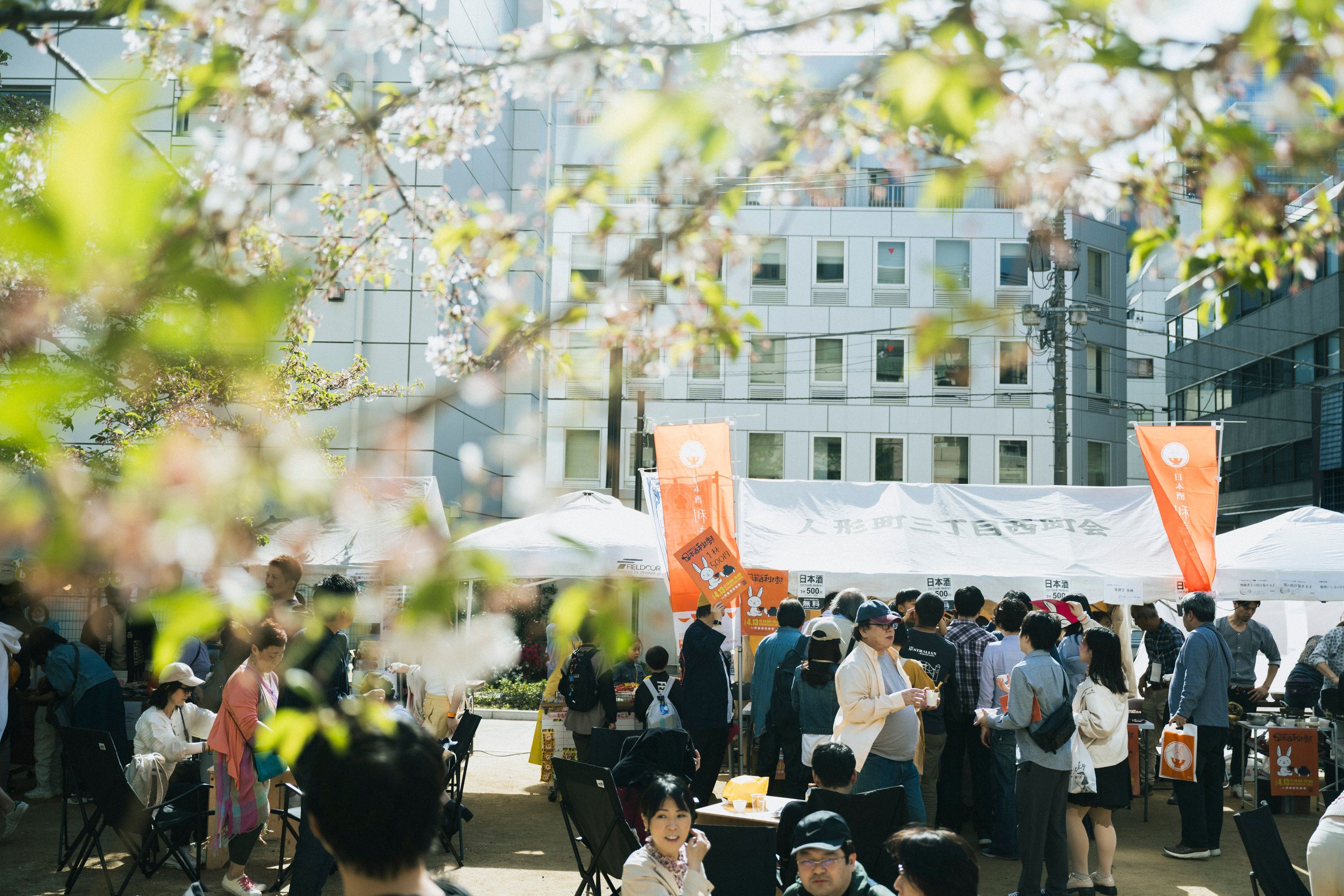
The event open to the general public is a tasting scheduled for late May or after. Attendees will be able to try IWC competition entries alongside sake from Hiroshima's local breweries. Specific dates, venue, and ticket details haven't been announced yet — the organizers say they'll update the official website when things are finalized.
The entry deadline for the competition is April 17. In 2025, 387 breweries submitted 1,476 sakes. What will this year's lineup look like? May in Hiroshima can't come soon enough.