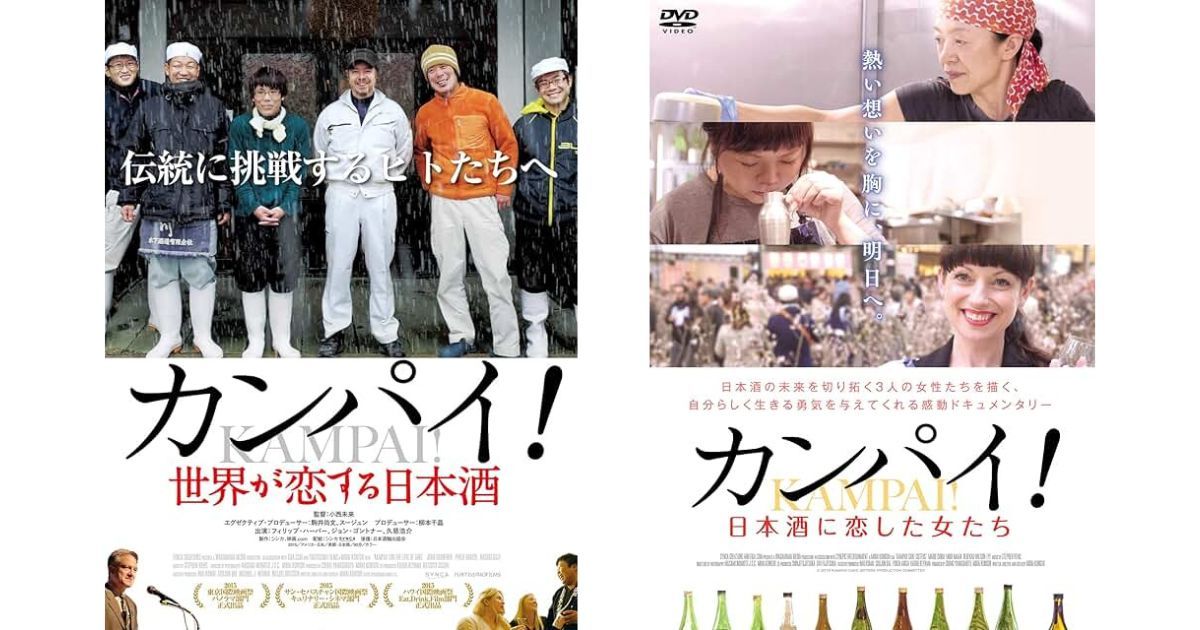
The "Kampai!" Documentary Has Evolved
What it took for me to become a sake fan wasn't knowledge or training—it was being thrown straight into the heart of it all.
Hello. My name is Mirai Konishi, and I'm the filmmaker behind the documentaries "Kampai! For the Love of Sake" and "Kampai! Sake Sisters."
A Fateful Encounter
In 2012, through a mutual friend in Little Tokyo, Los Angeles, I met Kosuke Kuji of Nanbu Bijin brewery.
At the time, I was a journalist covering Hollywood films and television. I had just become a Golden Globe voter—which came with real time constraints—so if I was going to create something of my own, a documentary felt like the most realistic path. The problem was, I couldn't find a subject.
Then I met Kuji-san.
Charismatic, outgoing, a force of energy that lit up everyone in the room. He shattered every preconception I had of sake brewers as quiet craftsmen in some feudal, closed-off world.
To be honest, I knew nothing about sake back then. Every sake I'd tried just didn't do it for me.
But this encounter didn't feel like coincidence. The big decisions in my life have always been driven by intuition, never by careful planning. This was no different. I decided to make a documentary about sake.
As I researched, I discovered foreigners thriving in the industry—Philip Harper at Kinoshita Brewery, sake evangelist John Gauntner. During production, I was also able to weave in the story of Daisuke Suzuki of Suzuki Brewery, whose life had been upended by the Great East Japan Earthquake.
The Experience of Being Inside
That film gave me—a complete outsider—access to the inner workings of the sake world.
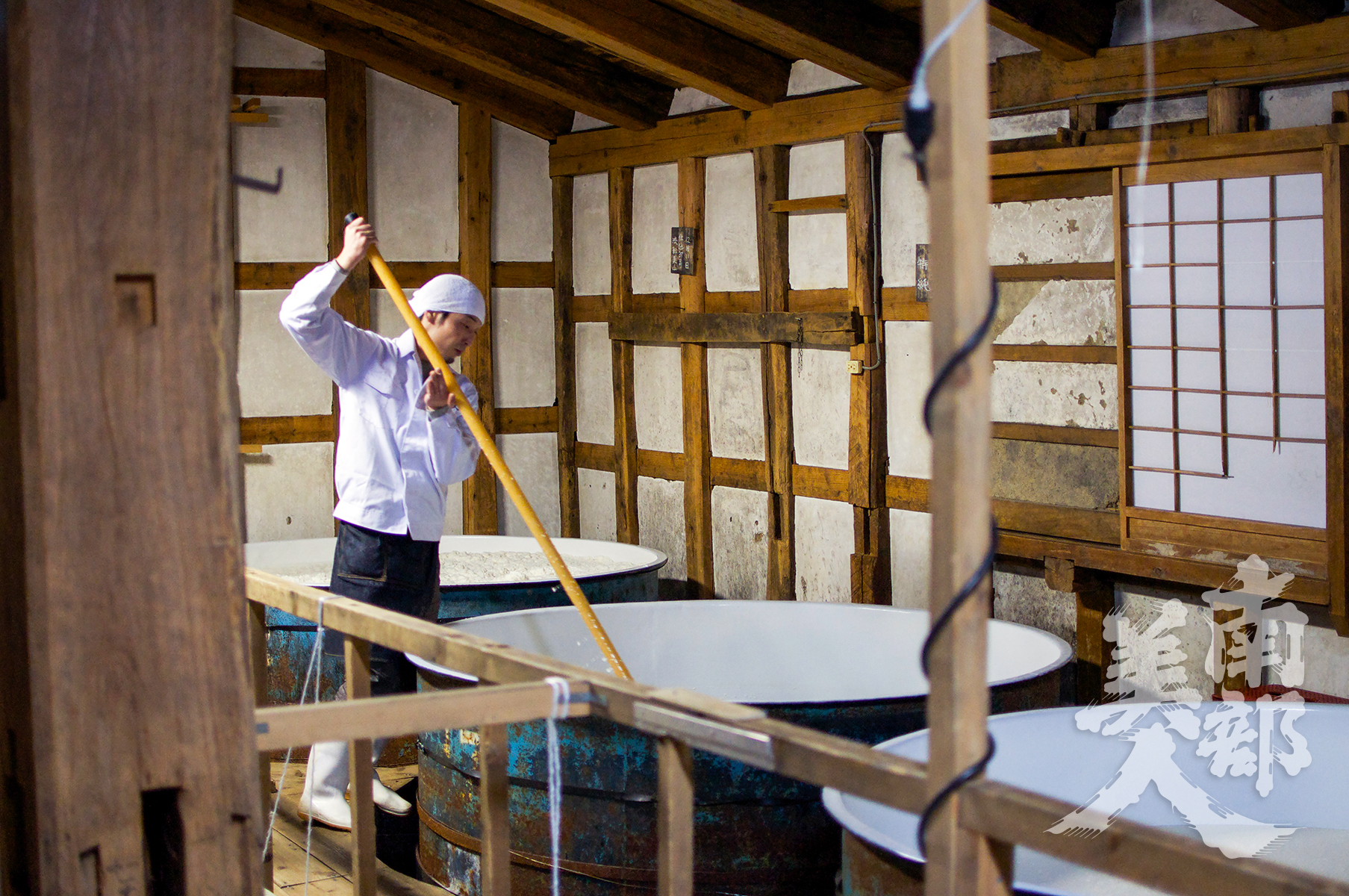
I walked into breweries and witnessed the staggering depth of sake craft. I drank with the brewers after hours, got taken to their favorite haunts. Looking back, I was mostly just eating and drinking. But somewhere along the way, I became a devoted sake fan.
The documentary had thrown me straight onto the front lines. The sake itself, yes—but also the stories behind it and the people I met. That experience changed everything.
If I hadn't made that film, I probably never would have found my way into this world.
From there, my attention turned to the women shaping the sake industry. Miho Imada of Fukucho, sake sommelier Marie Chiba, sake consultant Rebekah Wilson-Lye, and editor Kanako Kanki. My time with these remarkable women became "Kampai! Sake Sisters."
The first film carried the weight of the earthquake. The second turned out lighter—energetic, warm, and I think genuinely lovely.
Then, as I began developing a third film, COVID hit. The landscape for independent film distribution and funding shifted dramatically, and the project had to be shelved.
I wanted to share the world of sake—its beauty, its people. But the path kept narrowing. Years went by carrying that unfinished feeling, a guilt toward the people who had supported me, and a frustration I couldn't shake.
The Limits of Film—and a New Possibility
The turning point came out of nowhere.
On a trip back to Japan, over dinner with someone I've long looked up to, I heard seven words I wasn't expecting: "Why don't you just start a media outlet?"
I was floored. I had always assumed my only contribution could come through documentary film and video.
But when I sat with it, I realized: I'd spent years as a writer. I'd edited web media. I knew how this worked.
And the potential—that's what really hit me.
When the two "Kampai!" films came out, we held events at film festivals around the world. The brewers were moved. Sake events are everywhere, but the people who show up are mostly already converted. Film festival crowds are different—general audiences, people who'd never sought out sake on their own. That's how we reached people who otherwise never would have found it.
But film has its limits. Production takes time. The information you can pack in is finite. Screenings are few. And most importantly, that experience I'd had—being thrown into the front lines—could only reach so many people.
Sake is a remarkable product. But it's struggling to find new fans simply because people don't know enough about it. That's the core of the problem.
What's needed is a way to bring sake's world to more people, more easily. A platform where anyone can feel what I felt—like they're already on the inside.
From Film to Media
So rather than making another documentary, I decided to build something bigger.
An online media outlet can deliver fresh content constantly, accessible to anyone, anywhere, anytime. And unlike film, it's a conversation—not a broadcast.
KAMPAI connects breweries, sake retailers, restaurants, and users around the world. So many people are already working tirelessly to bring sake to a global audience. KAMPAI brings those efforts together and tears down the language barrier.
I didn't become a sake fan because of any special knowledge or skill. I became one because I happened to get access to the front lines.
Making that experience available to everyone—that's what KAMPAI is here to do.
The excitement I feel right now is the same as when I first launched "Kampai!"—no, it's bigger than that.
Will you join us in building the future of sake?