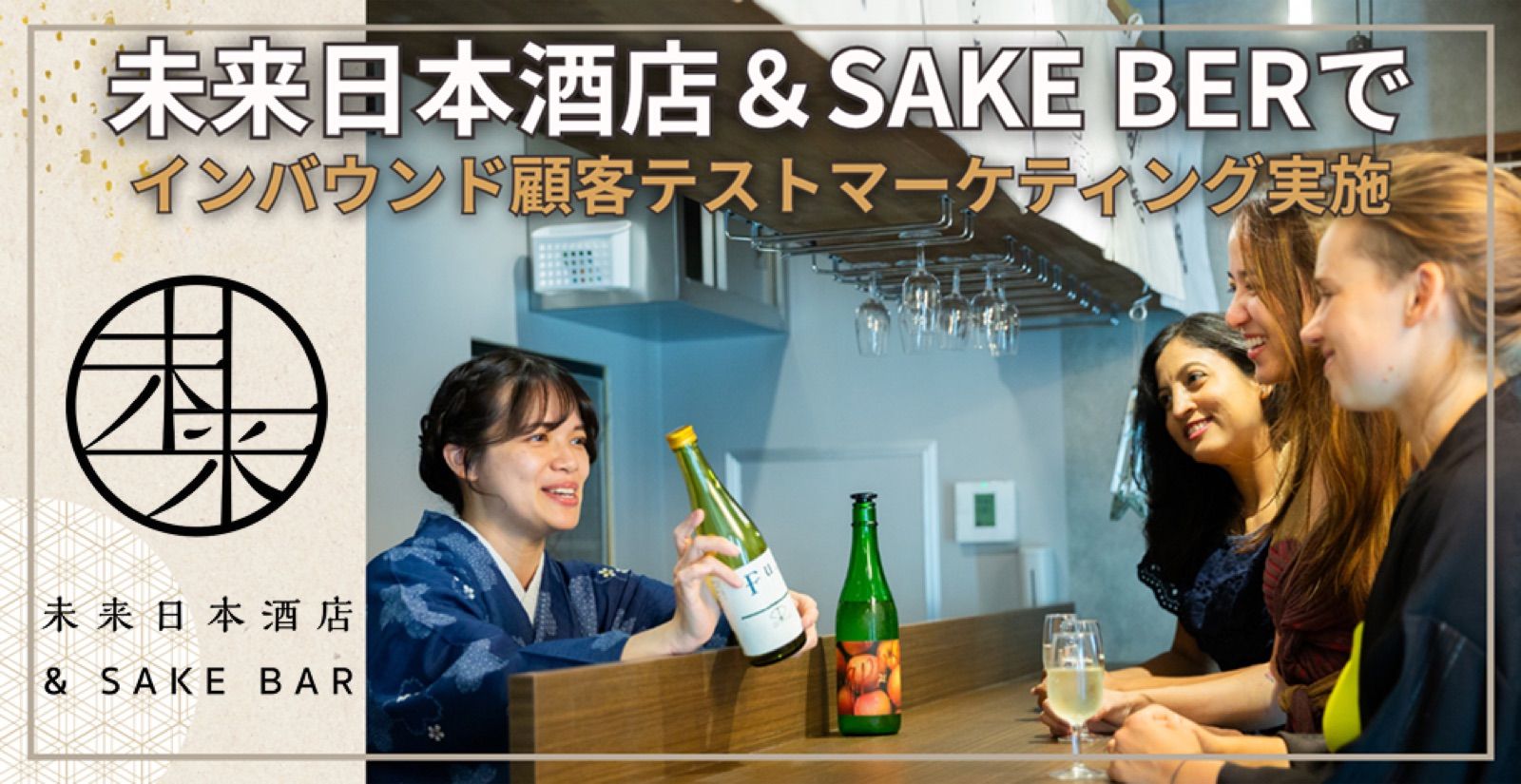
What kind of sake actually lands with inbound visitors? A Shibuya bar called Mirai Nihonshu-ten & SAKE BAR ran a tasting-and-survey study on four breweries from Minamiaizu, Fukushima, in partnership with the Survey Research Center. The bar is operated by Rashinban Inc., part of Frontier&Co. The findings were released today.
The four brands tested were Yamahai Junmai Kokken from Kokken Shuzo, Yama-no-i Kiyoka from Aizu Shuzo, Nanzan Junmai Ginjo from Kaito Otokoyama Shuzo, and Loman Junmai Ginjo Ikkai-Bi-ire from Hanaizumi Shuzo — all from the Minamiaizu region of Fukushima Prefecture.
Three patterns emerged
The data points to three consistent tendencies among inbound drinkers.
First, lighter, cleaner styles are easier to choose. Sake described as sukkiri (clean, sharp finish) tested better than richer, more umami-driven types. In Japan, full-bodied junmai often draws strong praise; for first-time drinkers, ease of entry seems to matter more.
Second, many drink sake the way they drink wine. They expect it to come with food, paired course by course. The Japanese framing — "sake is sake, on its own terms" — is far less intuitive to this audience than a wine-style pairing context.
Third, Japanese-only labels don't work. Inbound buyers needed either English notes (ingredients, flavor, the story behind the bottle) or a staff recommendation. Without one of those, the bottle didn't get picked up.
Why test four breweries together
The study deliberately put all four Minamiaizu breweries side by side, rather than testing one at a time. That comparison is what made the "lighter is easier" pattern visible — running it on a single brand wouldn't have surfaced the same insight.
The Survey Research Center commented that "for overseas promotion, the way taste is communicated should be built from real user feedback." In other words, before a brewery decides what message to push, it pays to put bottles in front of the actual audience and watch how they respond.
The label problem, finally documented
That sake labels are hard to read for non-Japanese speakers is not new — exporters and inbound-facing retailers have been saying it for years. What the study confirms is that without English notes or a staff recommendation, the bottle simply doesn't get chosen.
Read the other way: when staff can speak to inbound visitors in English, those visitors do try and buy. For now, the most reliable entry point into Japanese sake for inbound drinkers is a bartender who can explain the bottle.
The bar where the study took place
- Name: Mirai Nihonshu-ten & SAKE BAR
- Address: 2F Y'MEZ Building, 29-7 Udagawacho, Shibuya, Tokyo
- Hours: 12:00–22:30 (last order 22:00)
- Access: 3 min walk from Shibuya Station
- Website: sakebar.frontierco.jp
- Operator: Rashinban Inc. (Frontier&Co)
"Lighter wins." "Pair it like wine." "Without English on the label, it won't be chosen." None of these is news to people working the front line, but having them backed by data is the part that matters. We'll be watching for the next round, and which breweries get tested.