The Night I Became Waldo in Los Angeles
Kosuke Kuji

Honestly, I never thought the day would come when I'd be cast as Waldo from Where's Waldo?. A sake festival in Los Angeles, an open-air venue on a wide grassy lot. I wasn't wearing the striped shirt, but as I wandered around, the game was simple: whoever found me would be rewarded with a secret pour. A handful of brewmasters had been turned into Waldos, and guests went looking for us. I was spotted much faster than I expected, and soon I was pouring Nanbu Bijin for one non-Japanese guest after another.
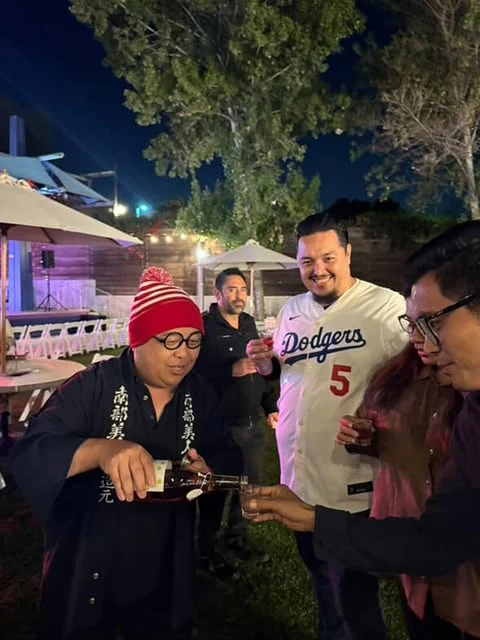
This, I thought, is a scene that could never happen at a sake festival in Japan.
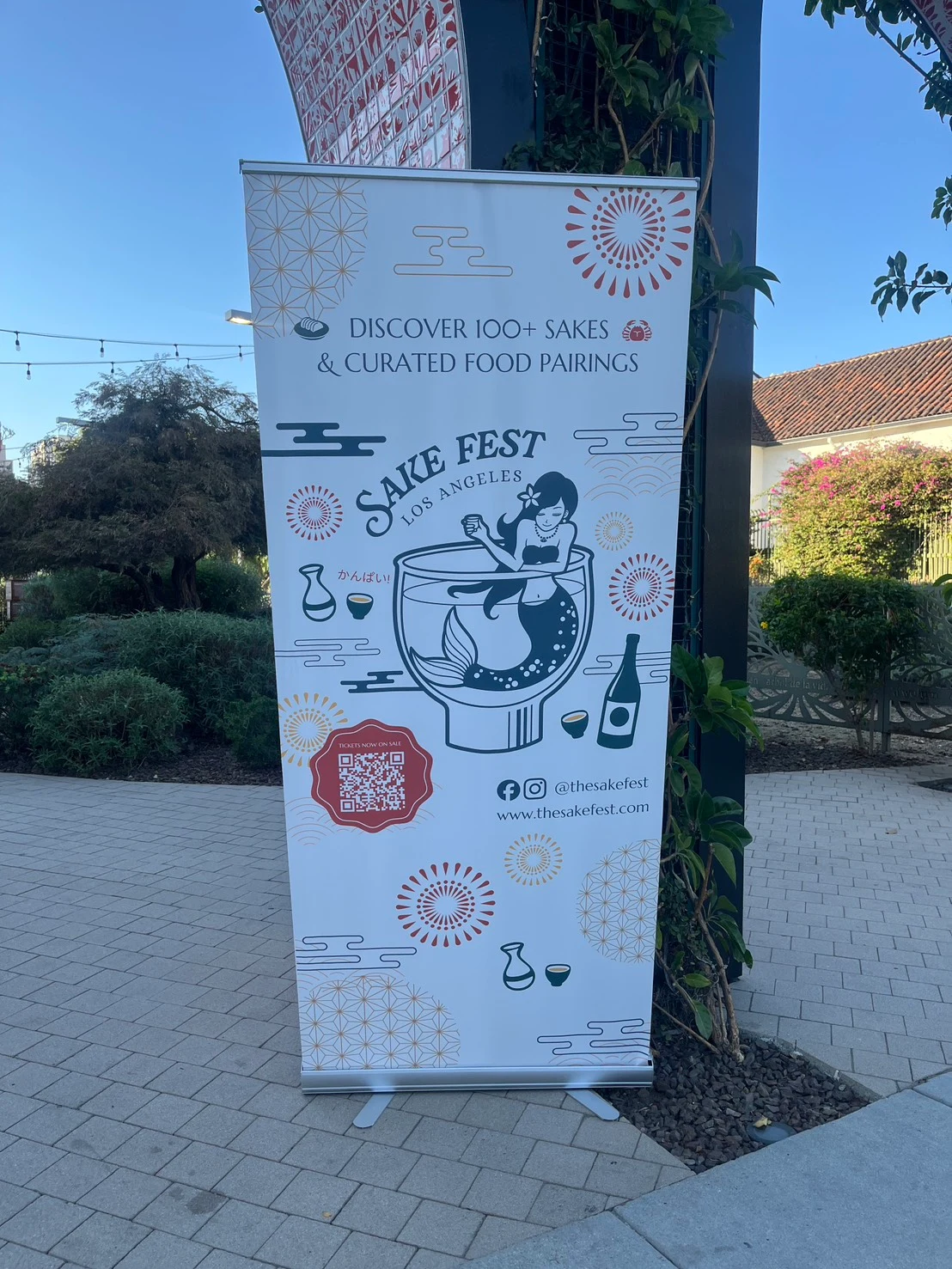
The festival was organized by Tippsy, a California-based company that runs a nationwide online sake store. Tippsy hosted the event; the venue was LA Plaza, near Little Tokyo. Nanbu Bijin, Tengumai, Amabuki, Hakkaisan, Kikusui. A lineup of well-known breweries stood in a row. Friday began at sunset, and Saturday unfolded in two sessions, daytime and evening. Drinking sake outdoors is, in itself, something you rarely see back home.
I first met Tippsy's founder Genki Ito in Los Angeles before the pandemic. "I want to sell sake online, across the United States," he told me. In Japan that would be nothing unusual, but alcohol sales online in America are tangled in a web of state-by-state regulations — it's a hard road. Still, his words had a center to them. I promised I'd support him.
A few years later, here I was giving the opening toast at the festival he'd built. Holding a microphone in front of his guests, now I was on the side being named and called. Through the pandemic, Tippsy had grown into a real presence in American online sake.
The heart of the festival is this: if you like something, you can buy it on the spot, online. The old bottleneck at overseas sake events has always been, "This is delicious — but where do I buy it tomorrow?" I've run into that wall many times myself. Here, the tasting and the point of purchase are continuous. It's a setup that only an e-commerce company could build.
Walking around, the mix of people looked nothing like a sake event in Japan. The taiko drum performance had been rehearsed and put on by locals from Los Angeles — not Japanese performers. The food stalls included oden from Hondaya, one of LA's landmark izakaya groups; sushi from WABI-SABI; and Gindaco, the takoyaki chain that set up inside Dodger Stadium and put takoyaki on America's map. Evenings in LA can actually get cold, and Hondaya's oden rescued me. A giant screen showed a baseball broadcast, and cheers rose from the crowd. It wasn't a sake event so much as a night when Japanese culture slipped into the fabric of LA's playground.
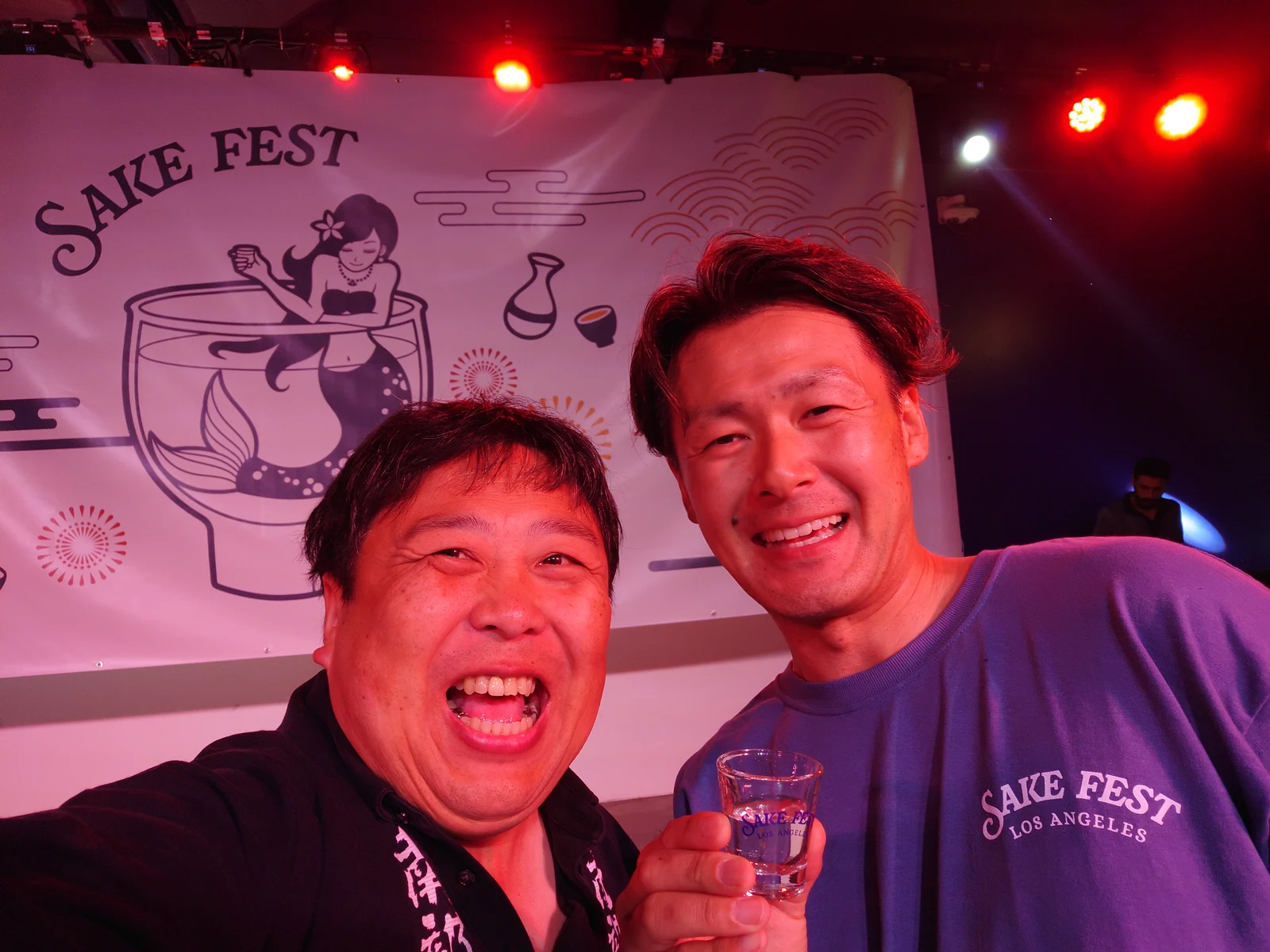
Back to Waldo. That I'd ended up on the side being searched for, rather than searching, meant something. In the old days I was the one walking into restaurants cold, asking, "Could you put this sake on your list?" The searching was always mine to do. Now, in a grassy outdoor plaza, strangers came looking for me, asking for a secret pour. Somewhere along the way, the roles had flipped.
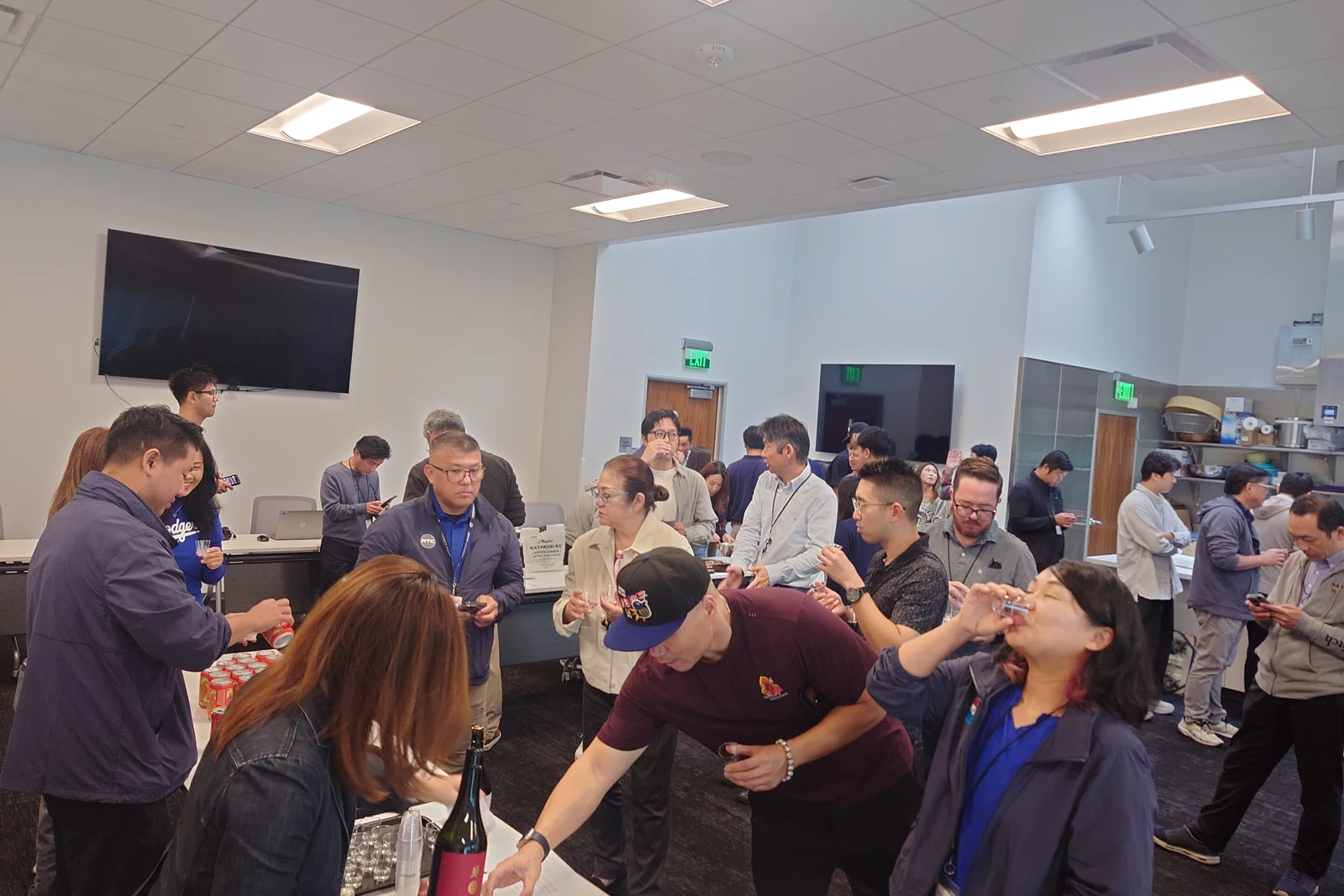
On a different day during the same trip, I was invited to the company-wide meeting of MUTUAL TRADING, one of the major Japanese liquor distributors on the West Coast. I spoke to more than a hundred staff — in person and over video — about Nanbu Bijin, and afterward sat down for a long tasting with close to fifty of their LA sales team, pouring our awasake sparkling and tokubetsu junmai. Ten new people had joined that sales team in the past year. The LA market, on both the selling side and the drinking side, is steadily thickening.
Walking the festival grounds with Genki, I kept thinking back to the promise we made before the pandemic. "I want to build a world where sake slips naturally into the American home." What sounded like a dream at the time was, here, standing in front of me as a fact.
Next comes another continent. How many more places in the world can we turn into the kind of land where sake is simply the norm? I'd like to grow the number of places where I get to be on the side being searched for — a little at a time.