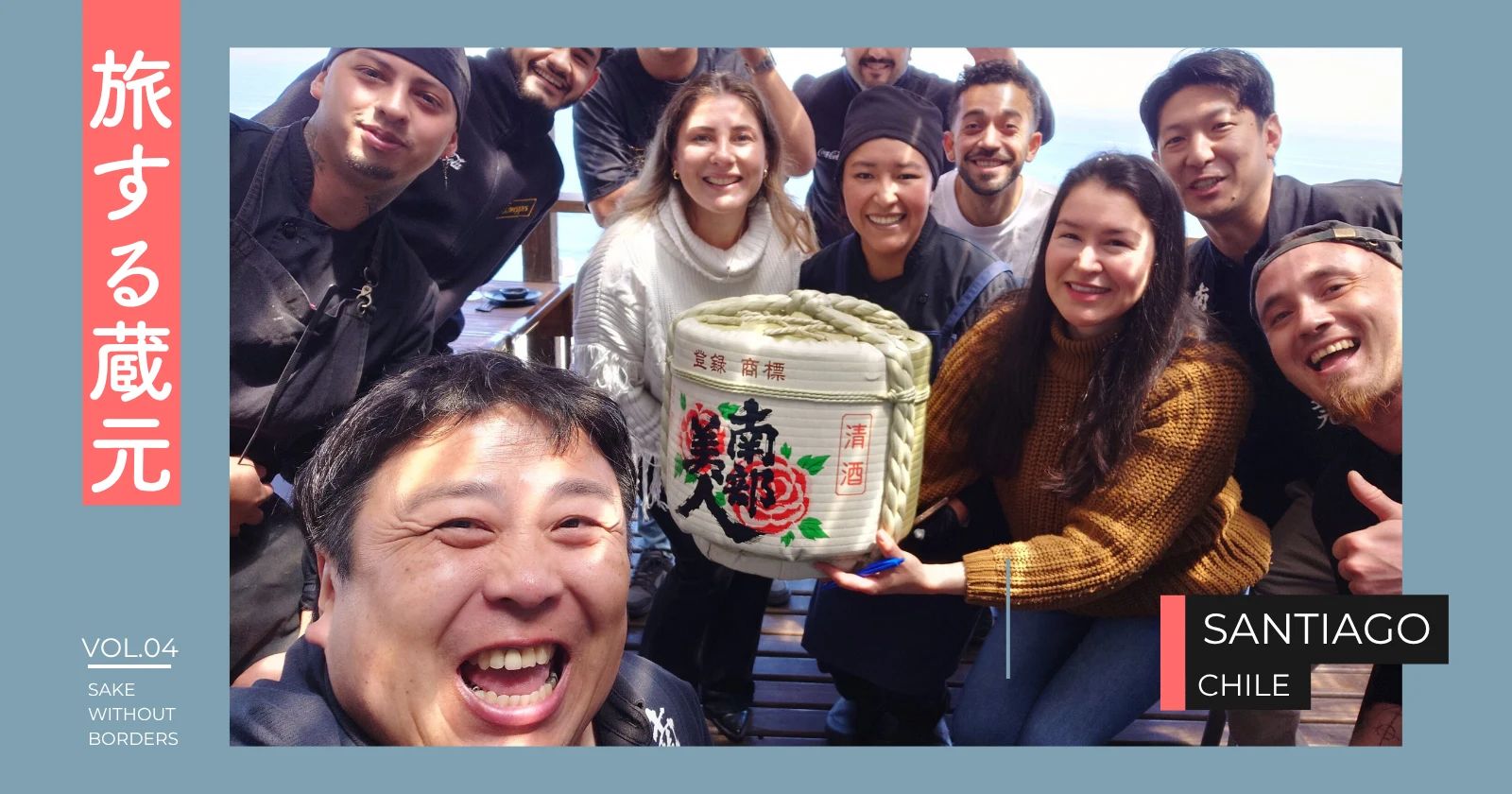
Honestly, I never expected a night of pairing sake with burgers. We were in Reñaca, a coastal town in Chile, two hours by car from Santiago, overlooking the South Pacific. There's a restaurant called SUMOKU — Asian fusion — and that evening, about twenty of us had gathered for a dinner on the theme of burgers and sake.

Why burgers? I asked the chef, Pedro, and his answer was clear. "Of course sake goes with Japanese food — everyone knows that. But for Chileans, Japanese cuisine is still special, something for an occasion. Burgers are something they actually eat." What he served was a burger glazed with teriyaki, with a quiet streak of wasabi mayonnaise inside. I took a bite, sipped Nanbu Bijin. The sweet-savory, the acidity, and the umami of rice joined hands much more cleanly than I had expected.
This was my third visit to Chile. I had flown straight south from Los Angeles — eleven hours. It hardly felt like the same country I had visited the two times before. Something has started moving here, quickly, in the few years since the pandemic.
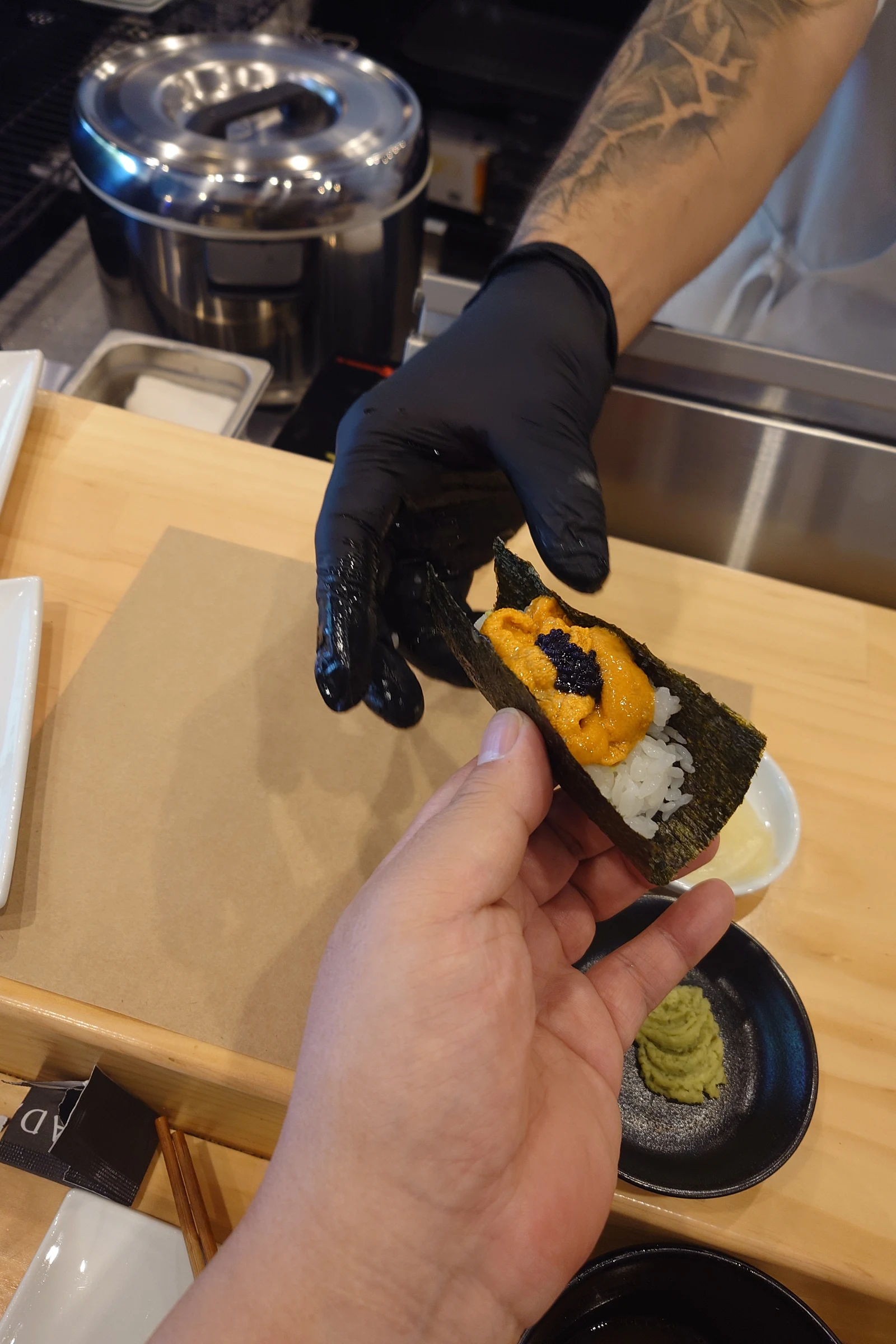
Back in Santiago, I visited a restaurant called Tadashi ("正") — a hand-roll sushi bar that had opened only four months earlier. Counter seats only. The owner is Noda-san, who also runs a ramen chain in Chile called KINTARO. A counter-only sushi place is still a rare thing here. The one sake on their list is Nanbu Bijin's Junmai Daiginjo Sakemirai. Before opening, I walked the staff through the brewery's story and what makes Sakemirai what it is. A few days later, I heard that during a single lunch hour, eight out of ten customers had ordered it. There was a hand roll made with Chilean sea urchin. In South America, really? I thought — and then tasted it. Extraordinary.
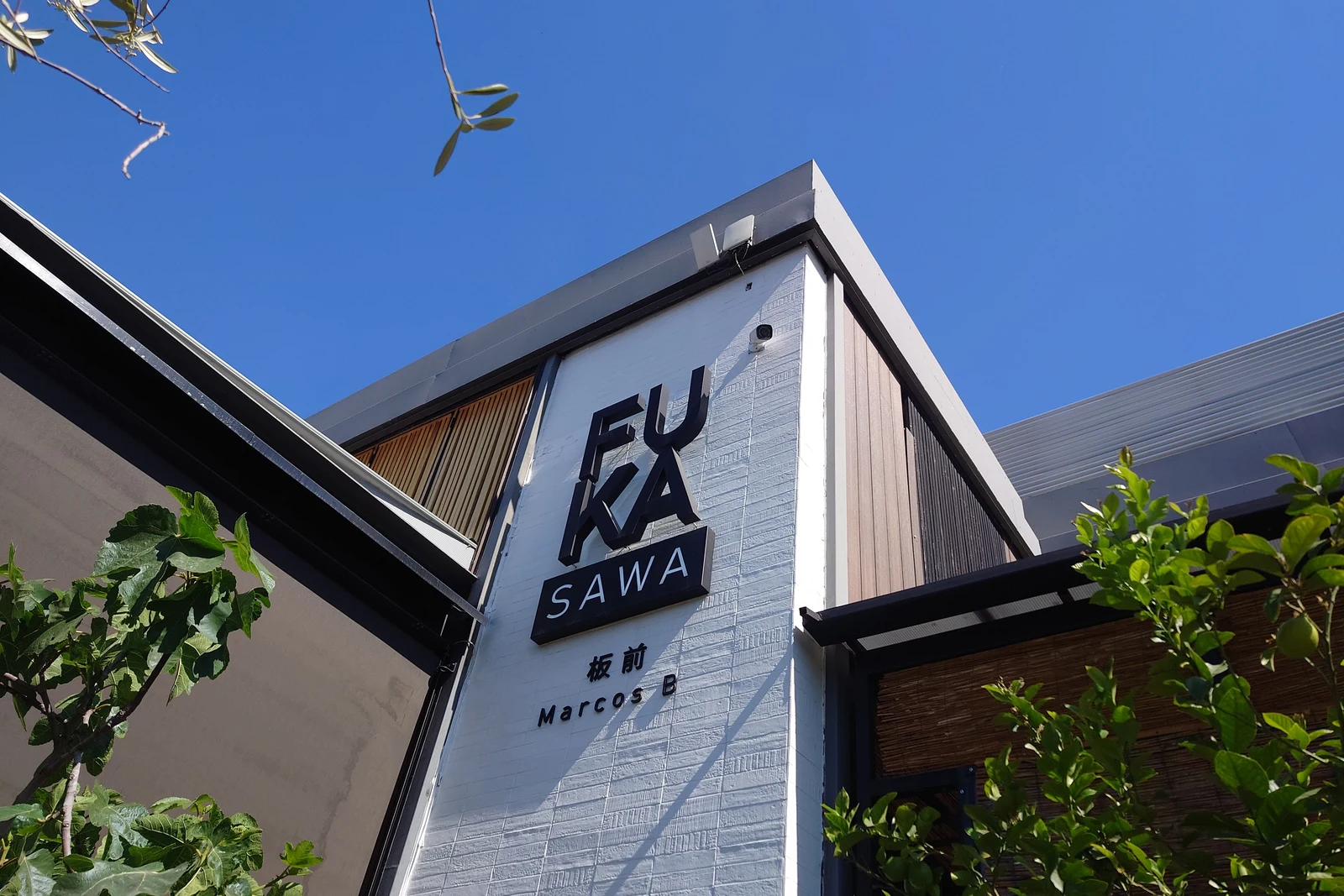
It isn't only the casual end of the market that's moving in Chile. At FUKASAWA, one of the top high-end Japanese restaurants in Santiago, I ran a staff training built around Nanbu Bijin's Junmai Daiginjo and Daiginjo — the premium end drives their sales, so I went deep on those two bottles. At TENGU, the Japanese restaurant inside the pre-opening W Hotel Santiago, we hosted a pairing dinner for forty guests: five courses, five different Nanbu Bijin, and to close, a kagami biraki — the traditional breaking of a sake cask. For most of the Chilean guests, it was the first time seeing the ceremony, and the response was bigger than I'd expected.
The centerpiece was a seated tasting at the Japanese Embassy in Chile, hosted by Ambassador Takataka Sone. Staff of Japanese restaurants, VIPs, and operators from non-Japanese restaurants — everyone sat in the same room. I poured three Nanbu Bijin. Haruo Matsuzaki, a judge at the Catad'Or wine and spirits awards, came, as did Ueno-san of Sake School of America in Los Angeles — himself a Sake Samurai. Before pouring each sake, I explained who makes it and how. My sense was that the philosophy reached people even before the flavor did.

From a burger joint on the coast to a state-hosted tasting at the embassy — within the same few days, Chile is pulling sake toward itself. Casual and formal are moving at once. I haven't seen that happen in many other countries.
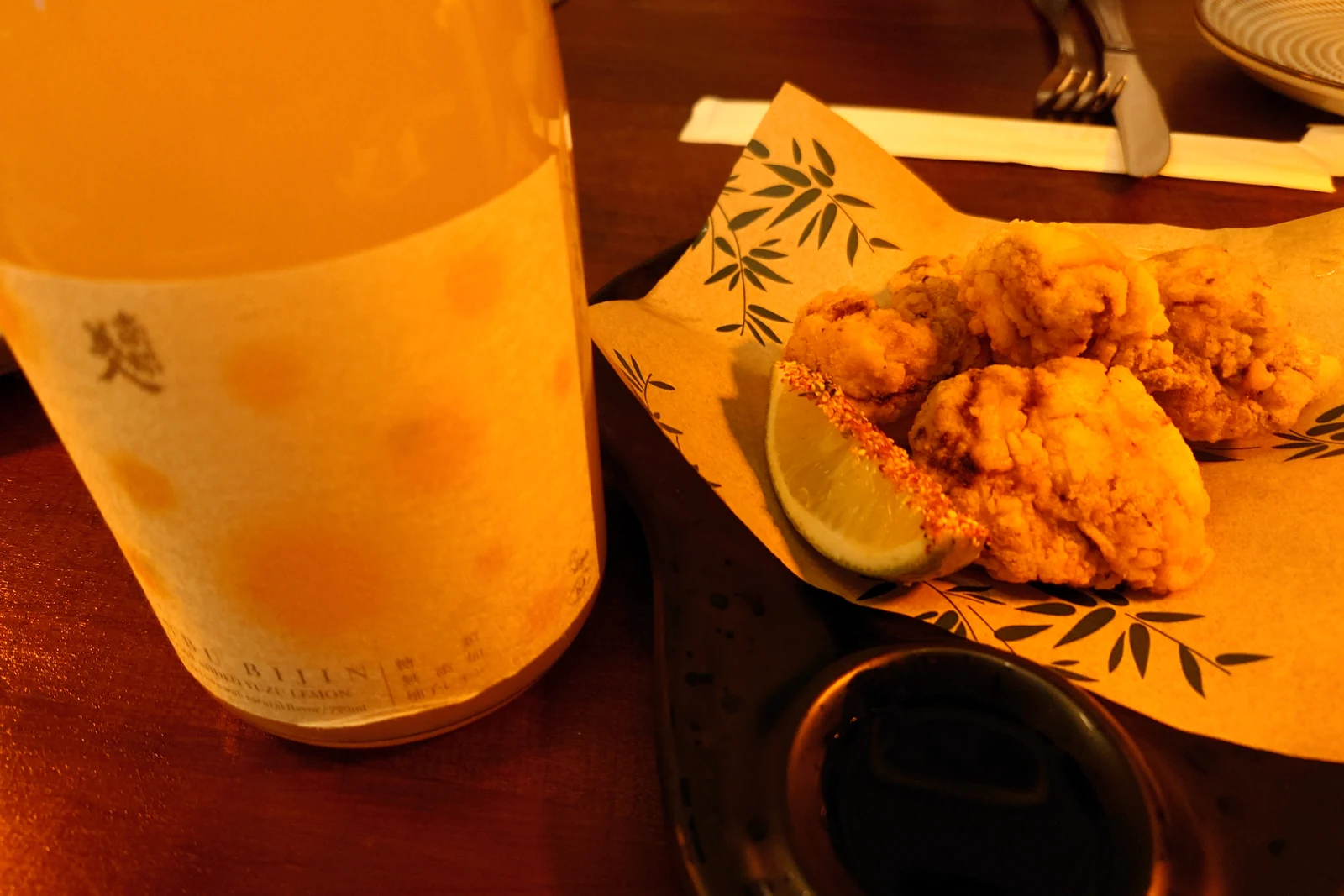
On the last night, we did a debrief at GAKU, a celebrated Japanese restaurant in Santiago. The one combination I'd been dying to try there was Nanbu Bijin's sugar-free yuzu lemon with karaage — deep-fried chicken. At the embassy tasting, I had gone on about how well they go together. Now the test. A bite of karaage, a sip. It matched exactly as I'd said it would. The whole table murmured. Sometimes the plate travels further than the explanation.
The person moving Nanbu Bijin — and many other Japanese sakes — across Chile is Mr. Nishii, head of HALOSUR. Proper Japanese sake really only began arriving in the country after the pandemic; we're talking just a few years in. And already, this is the pace. If I'm being honest about what I feel: right now, Chile may be one of the fastest countries in the world for sake to take root.
Next, I'll be somewhere else again. I'd like to add a few more places where the phrase "it actually goes with burgers, you know" lands without anyone flinching.