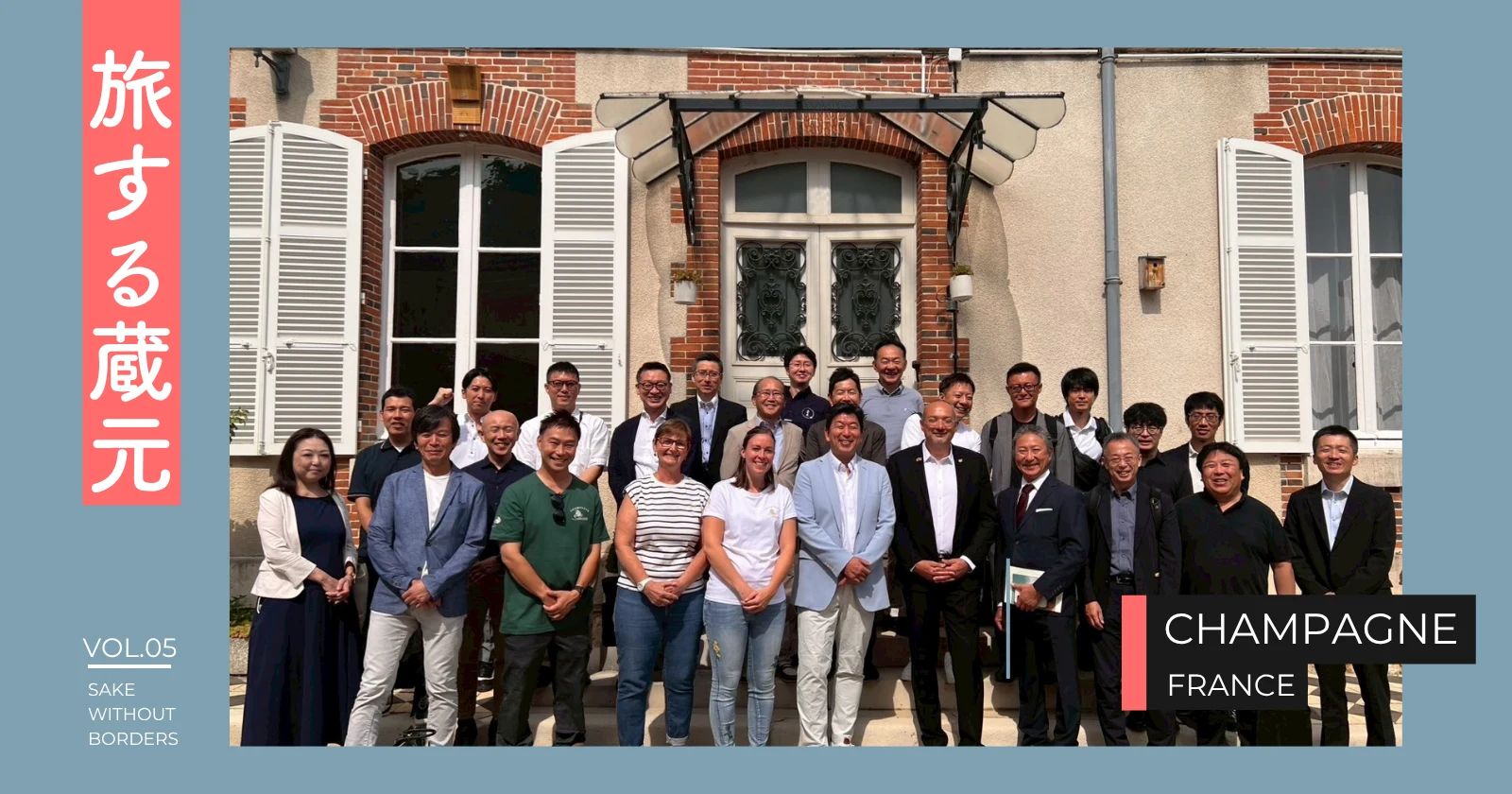
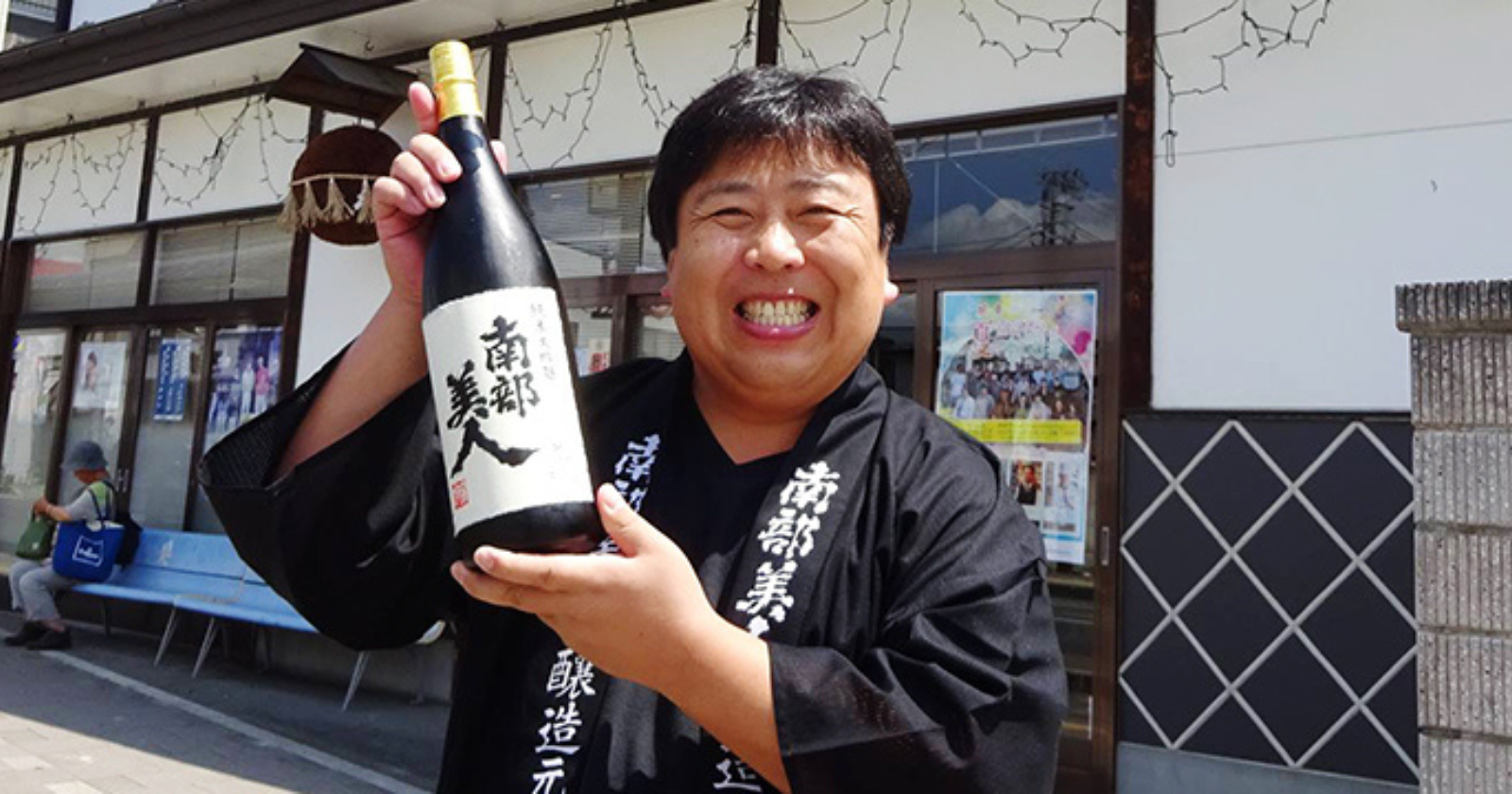
Honestly, on this trip I was the one being taught. Usually I travel the world with a single suitcase to talk about sake. But in Champagne, France, I was the one with the notebook open, taking notes.
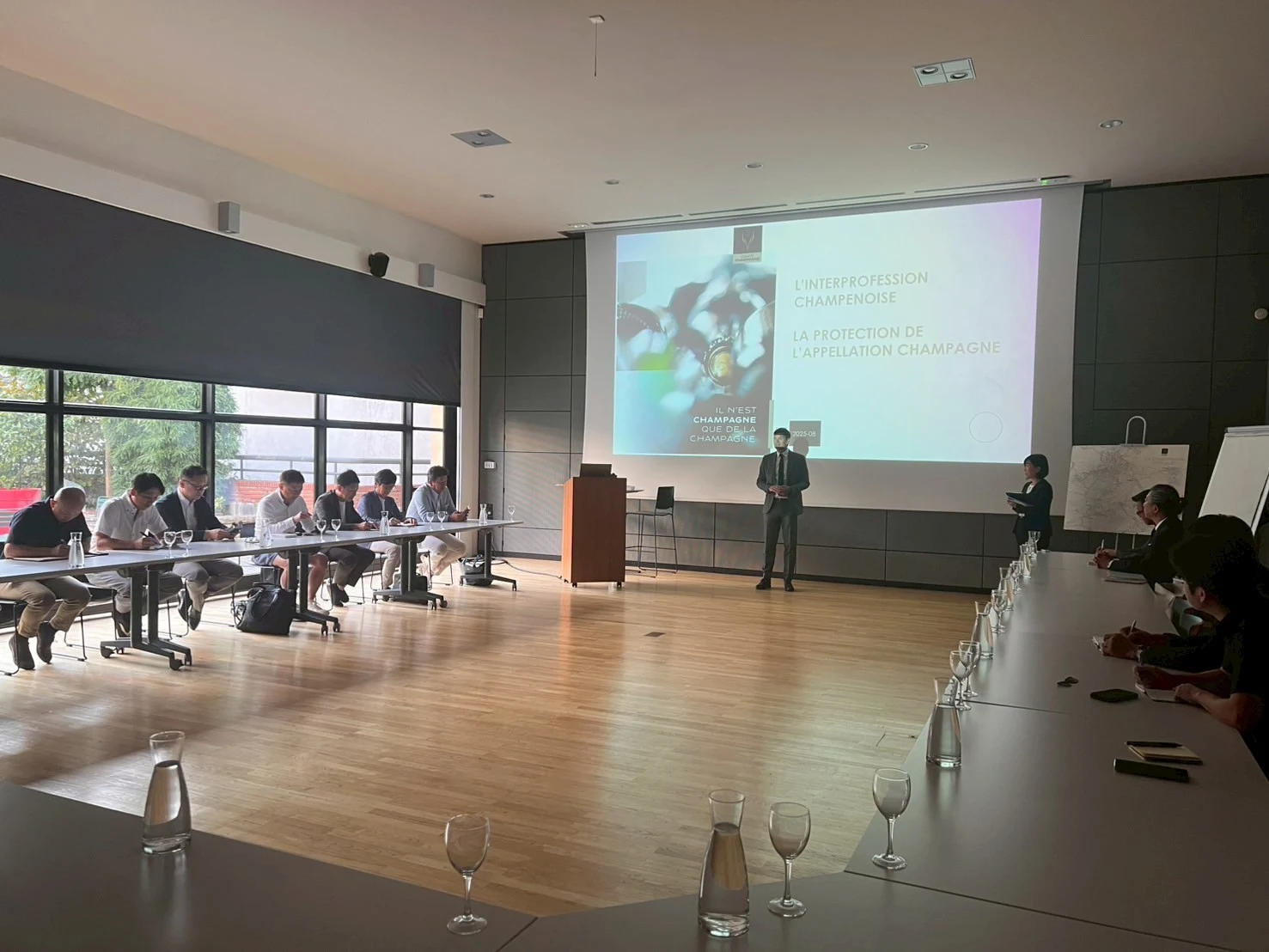
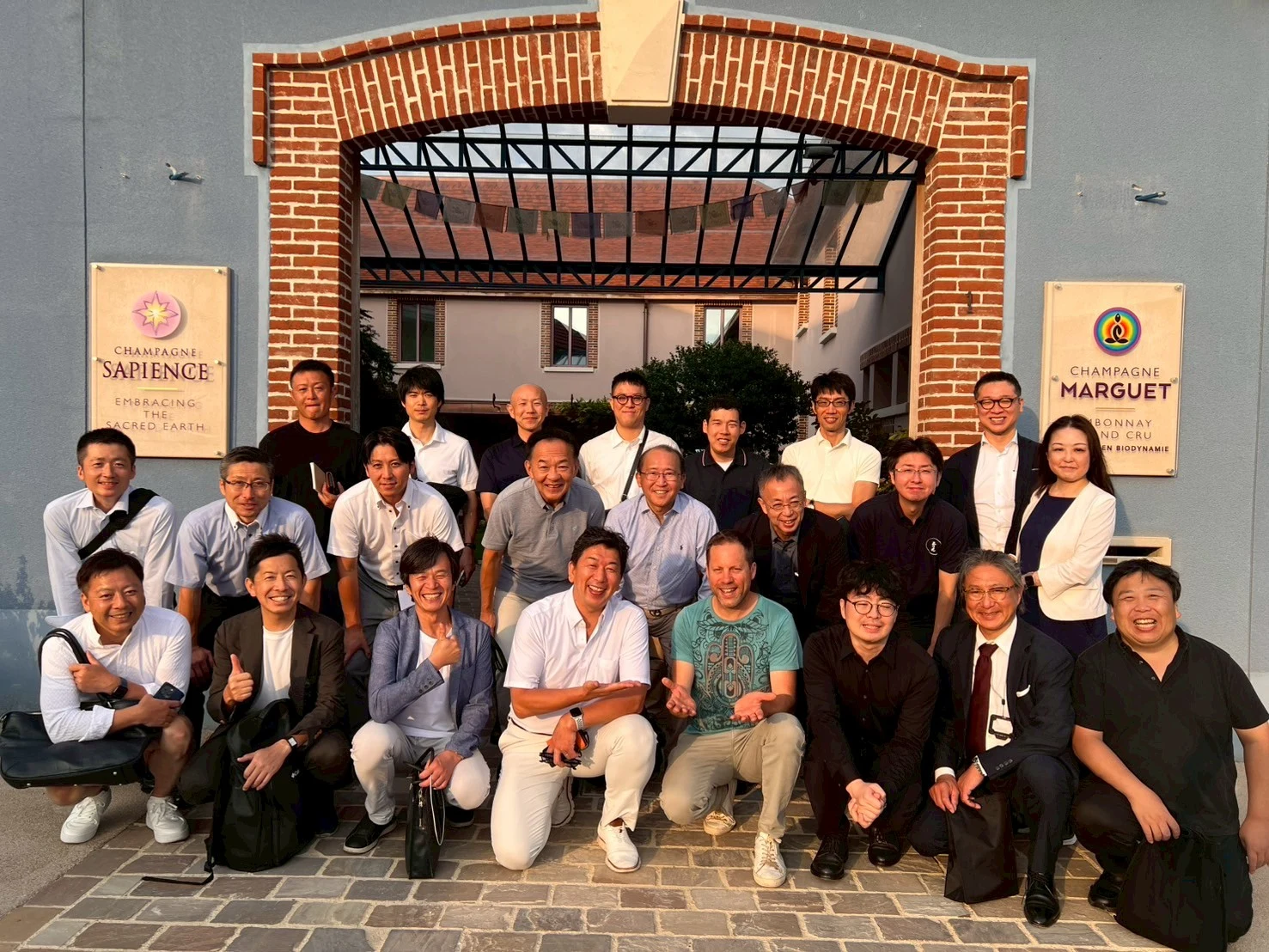
I was there as part of a delegation of producers of awa-sake, Japan's certified sparkling sake — a category Nanbu Bijin also makes. The trip was organized by the Awa-Sake Association of Japan. The brief was simple: go to the summit of the world's sparkling wines, and look closely at how its norms and its workshops actually function.
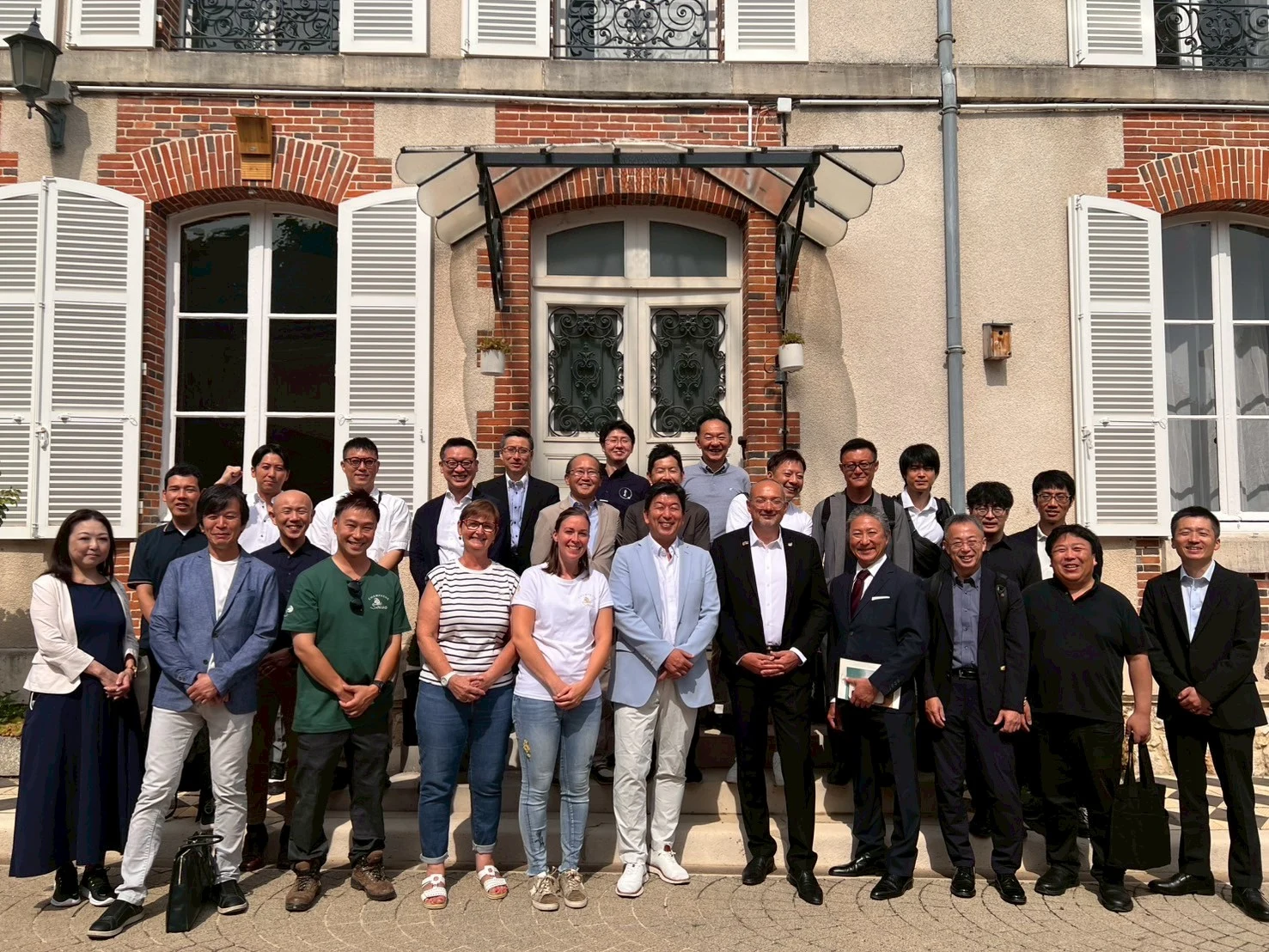
The first stop was the Comité Champagne. It's the body that protects the Champagne name, managing a vast set of rules covering everything from cultivation to production. Said like that, it can sound restrictive. On the ground, the picture is different. The rules exist to raise the value of Champagne, and protecting the brand is the same thing as protecting every producer who works under it. The organization, I was told, will soon move into a new facility for production research. Even the work of guarding norms, I thought, evolves. As someone running a still-young Awa-Sake Association at home, this alone was the first big takeaway.
I kept taking notes.
Next we visited De Sousa, a traditional Champagne house run by three siblings. The owner himself walked us through the first fermentation room, the cellars where the second fermentation happens, then the remuage (riddling) and the dégorgement (disgorging) — performing each step in front of us. Processes I had read about and thought I understood looked like something else entirely once they came through human hands. The small turning of a bottle's angle. The weight of the moment when the sediment is expelled. This is a handcraft I could carry, as is, back to my own brewery.
What hit me hardest was Champagne Marguet. Introduced to us as a pioneer of natural Champagne. No dosage. SO₂ used as little as possible. The vineyards plowed by horse. They keep chickens. They grow other crops besides the grapes for Champagne.
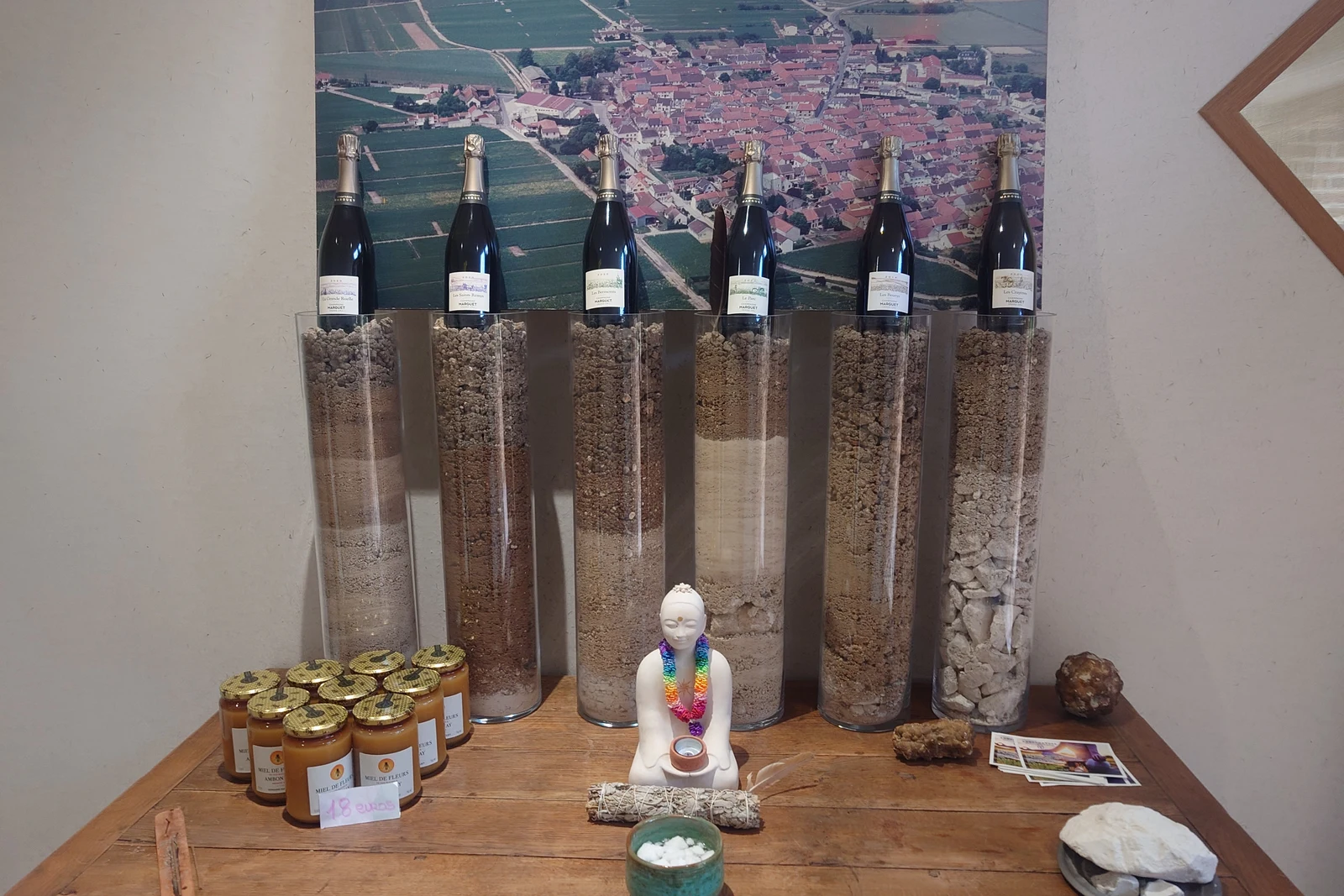
The owner spoke slowly, and his words have stayed with me. The spirituality of making Champagne. The relationship between the land, the sky, and Champagne itself. Then we tasted, and only then did I understand. This isn't a conversation about technique. It's a philosophy of how to keep making Champagne, on this same piece of land, year after year. A different kind of sparkling wine — that's what was in the glass.
There was one more thing the visit made plain. In Champagne, the harvest had begun far earlier than usual. That's climate change, the producers told me — the same answer from each one. The land that has produced the world's greatest sparkling wine is being squeezed by the climate, in real time. And still, they go on evolving the norms, showing the craft by hand, reaching toward natural methods.
So what does an awa-sake maker carry home from a trip like this? Not "let's do exactly what Champagne does, but in Japan" — that was clear. Champagne has its own spiritual lineage; awa-sake has its own, still unwritten, still to be woven. How do we build our own norms? How do we show our craft, by hand? How do we get our own land and sky into the sake itself? I came back with questions, by the dozens, and not many answers.
The next trip will be somewhere else again. But I want to keep this posture for a while. Before going out to teach, go out to learn. That's a kind of travel I'd like to do more of.