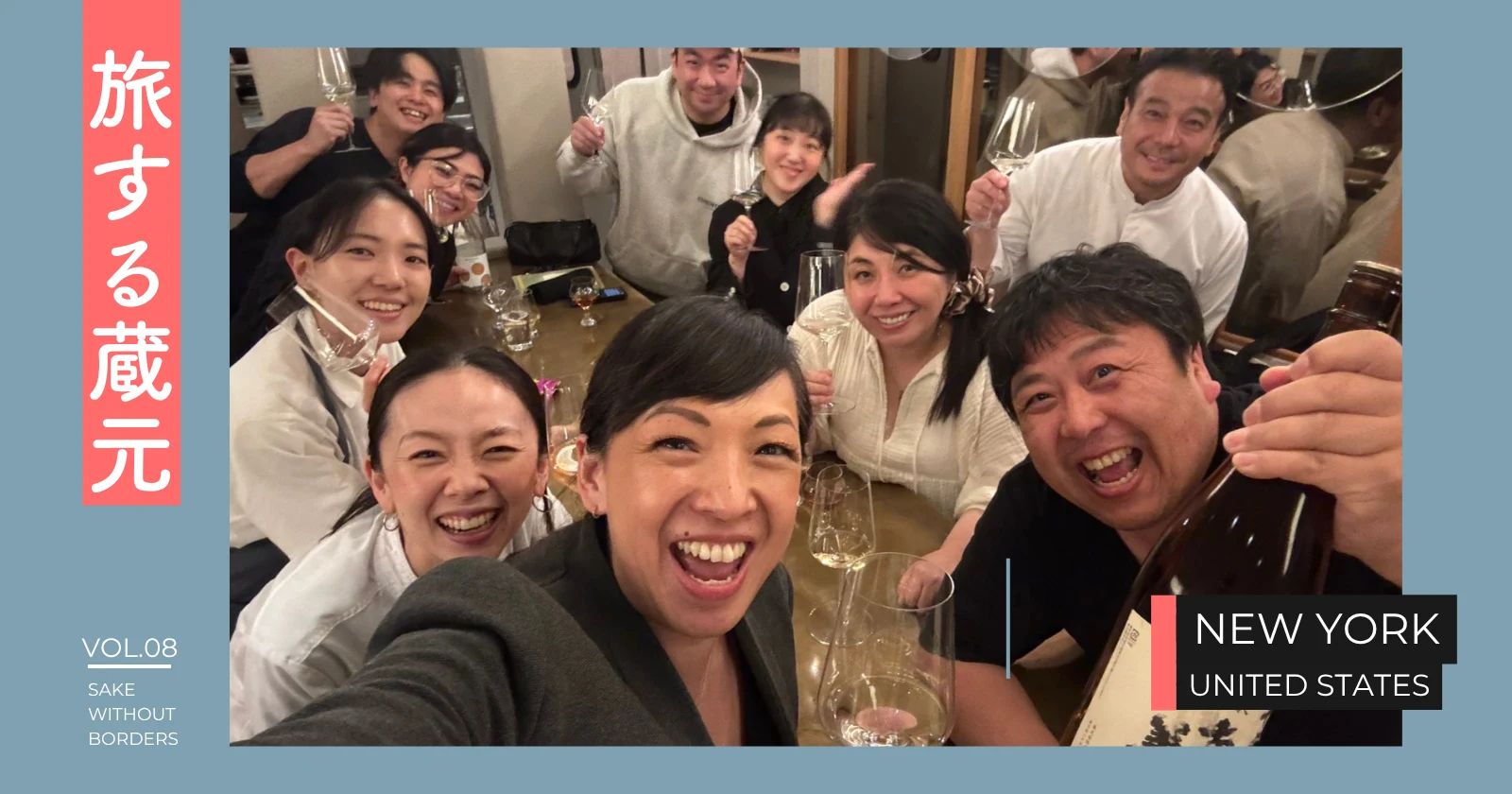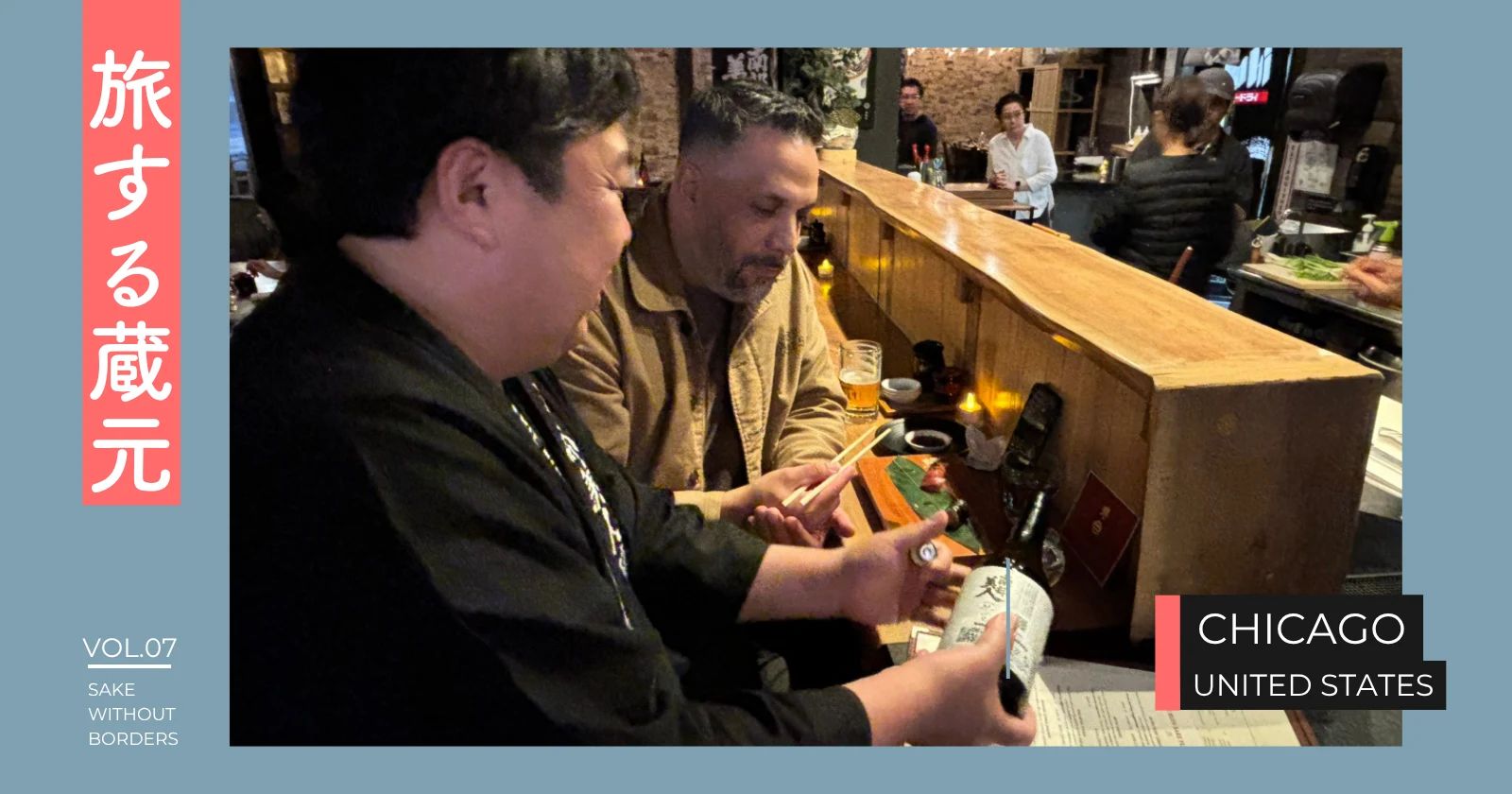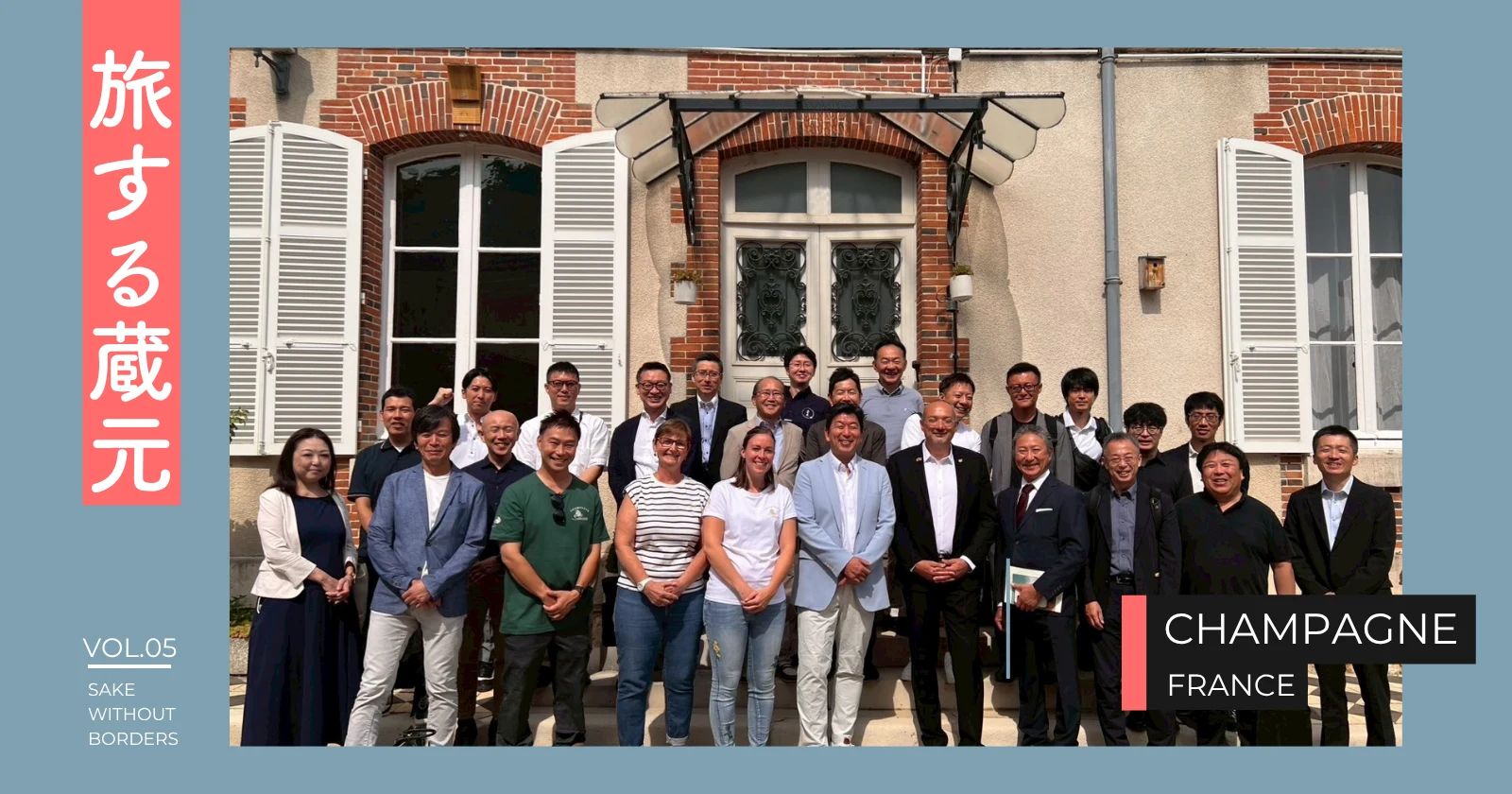
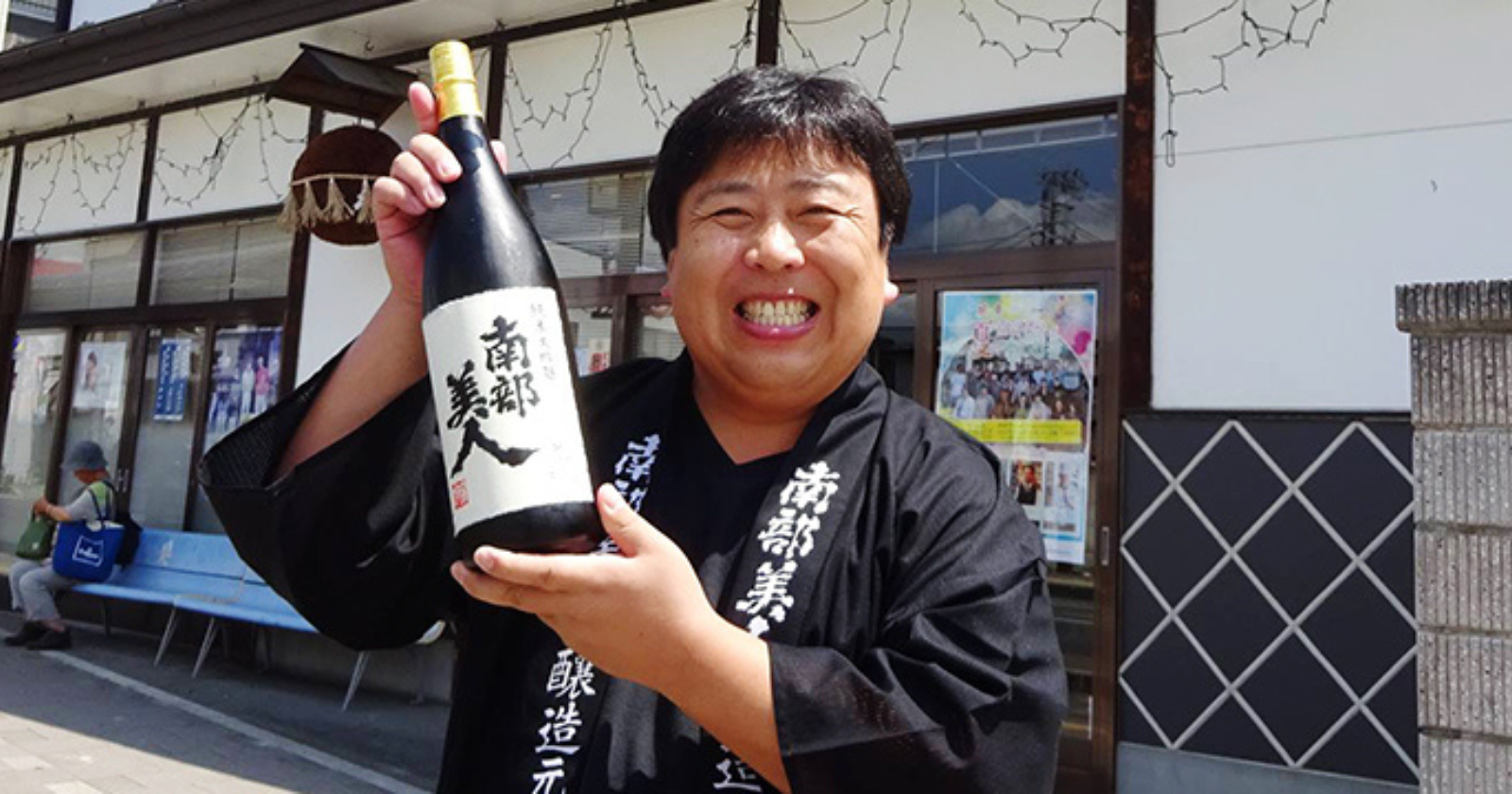
When I arrived at the venue in Boston, the first thing I saw was the lines at the food stalls — twenty, fifty people deep. Ramen, takoyaki, wagyu — every Japanese stall had a line. The ramen came in roughly half the usual portion, around twenty-five dollars a bowl, and still the lines didn't shrink.
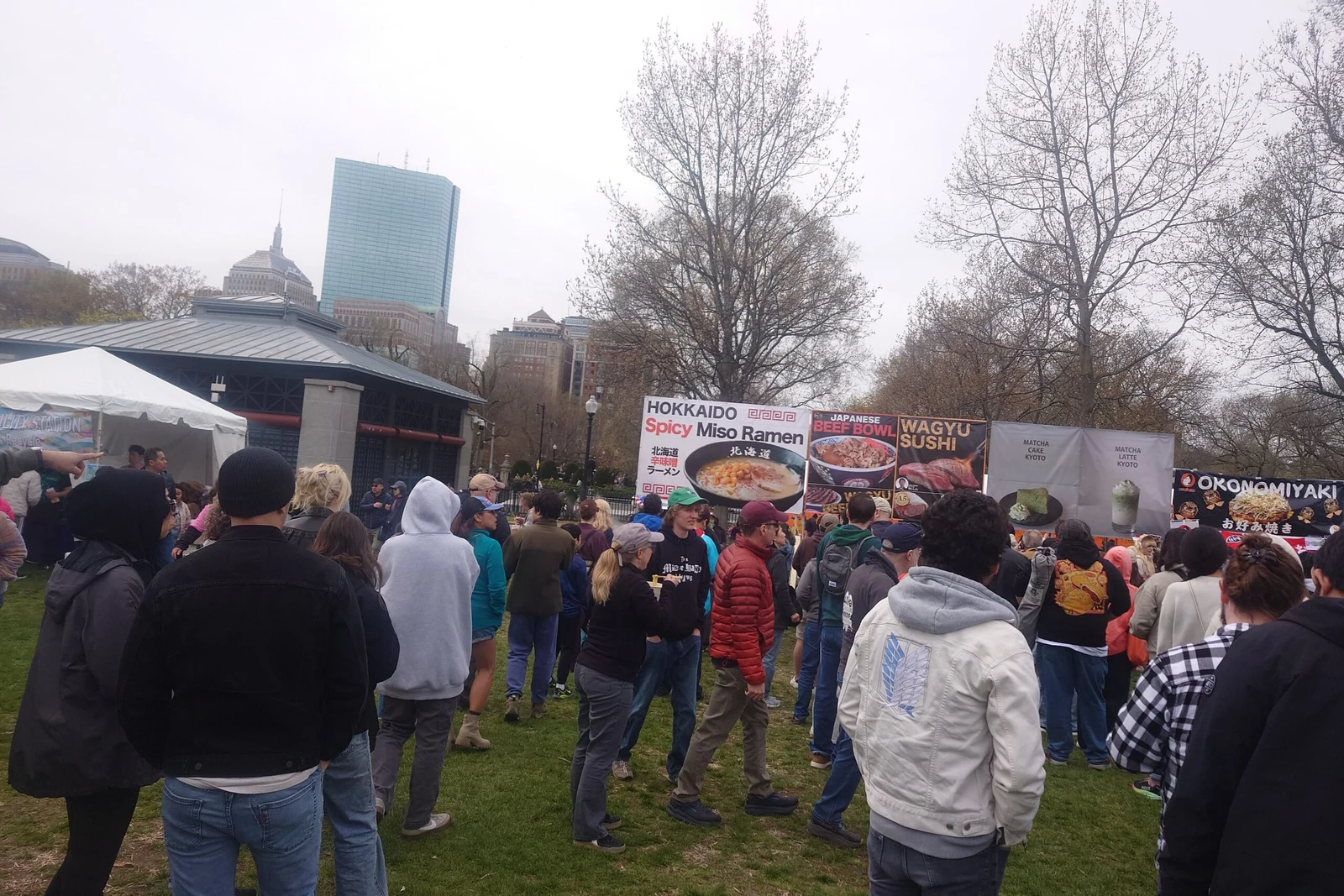
The Boston I had in my head was libraries, brick walls, and quiet campuses. A line for street food didn't fit that picture.
But that, I came to understand over the course of the trip, is what Boston is now. The "university town" label isn't wrong. Harvard is here. MIT is here. It's one of the rare American cities with deep historical and cultural roots. But that university town has also become a cluster for the pharmaceutical industry. The world's biggest biotech firms are based here, and people and capital are moving through, all the time. The level of Japanese food in this city — including the kind of restaurant that pours Nanbu Bijin Tokubetsu Junmai — is among the highest in the country, the locals kept telling me. Right next to New York, but on a different axis, Japanese cuisine has grown up here on its own.
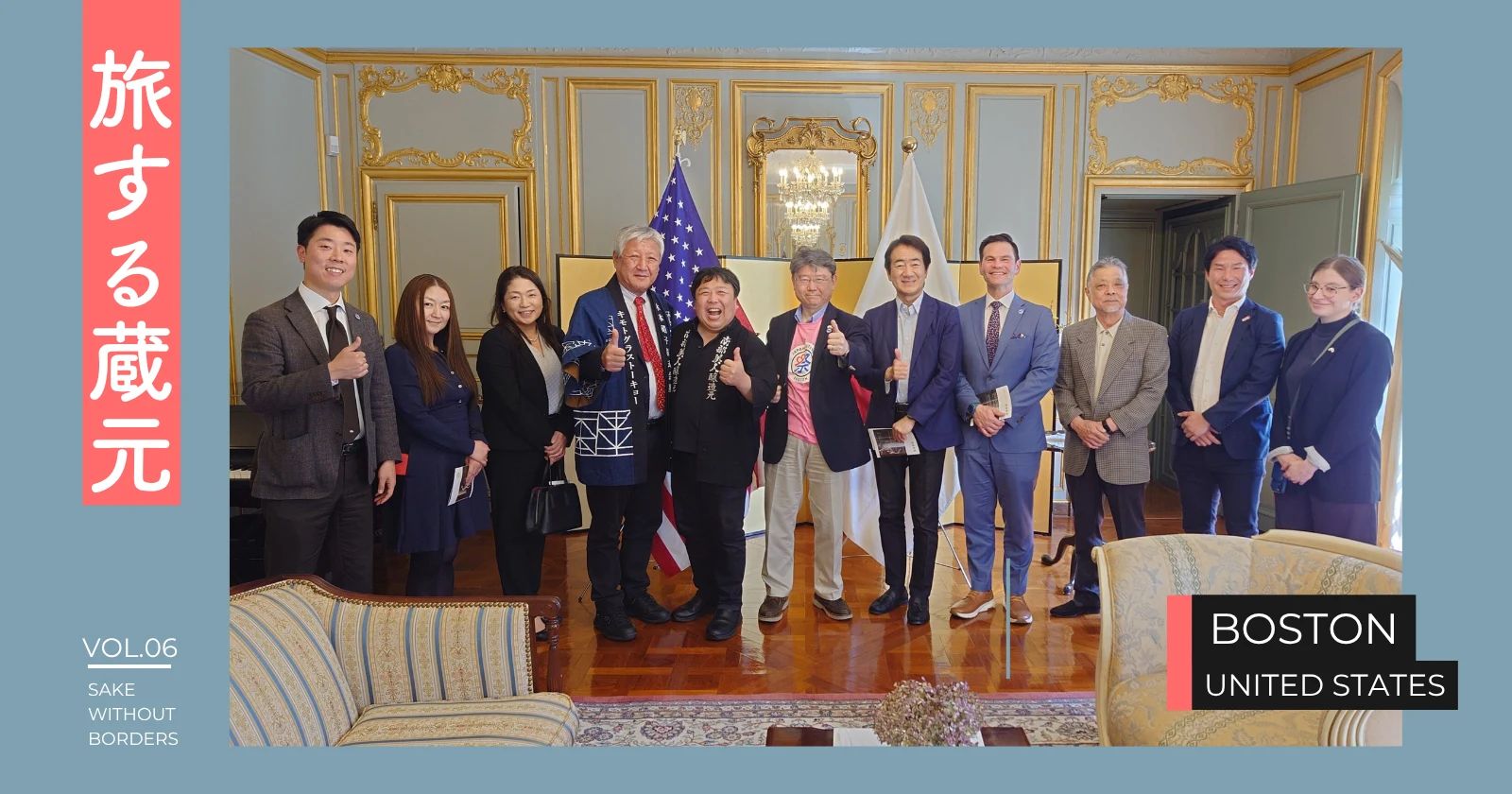
On day two of the Boston Japan Festival, I was given a slot at the Consulate-General of Japan's cultural booth: a seminar on sake and glassware, alongside Mr. Kimoto of Kimoto Glass. Change the glass, and the same sake reveals a completely different face. We lined up Edo Kiriko cut crystal next to thin colorless tasting glasses, and let people try the same sake side by side.
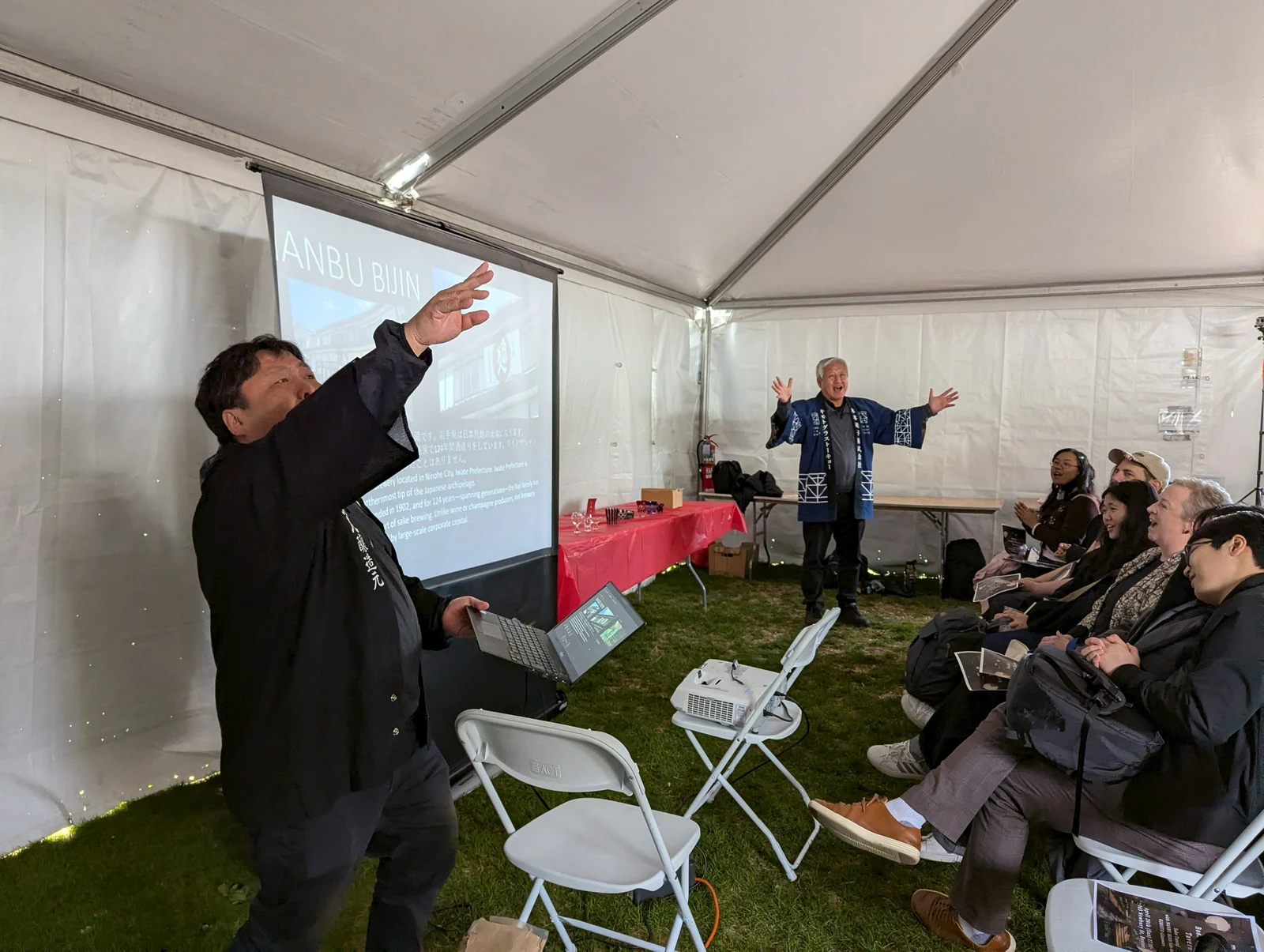
The seminar was packed. A black Edo Kiriko priced at six hundred dollars apiece sold faster than I had imagined, right next to where I was speaking. That night was a tasting at the sushi restaurant SUSHI BOSSO. The line stretched out the door, and the sake we'd brought was gone well before the end of the evening.
The next day, accompanied by Consul-General Takahashi, I visited Mandarin Oriental Boston. The idea was to bring a sake-and-glassware event into the hotel. Sales Manager Alex tasted everything we had brought, and seemed genuinely interested. We'll be working out the specifics from here.
It wasn't only the formal side that was moving.
Sushiro's new sushi-izakaya brand, Sugidama, has its first overseas location in Boston. Not New York, not LA — Boston. Once I saw it, I understood why. Nanbu Bijin was already on the menu, and locals were ordering it without hesitation. I have rarely seen a first overseas location feel this naturally folded into the neighborhood around it.

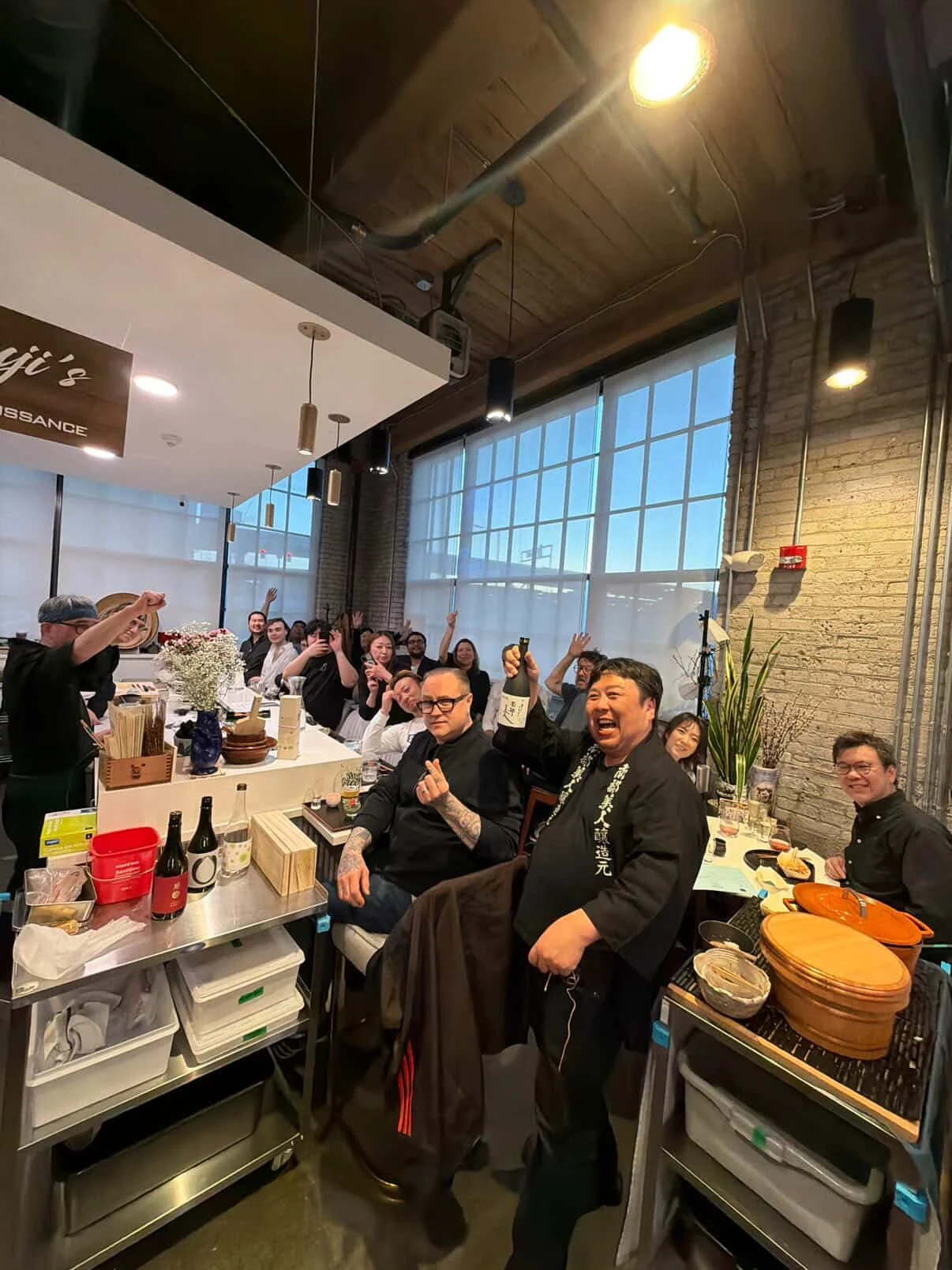
The last night, we wrapped up at a Japanese restaurant called Youji's. Their tagline is "Washoku Renaissance" — Japanese cuisine, walked back and forth between tradition and the present day. Owners and chefs from the city's top restaurants showed up, and the night ended on the highest possible note.
In the same city, the gravity of the academic town and the speed at which Japanese food is moving were running in parallel. The version of me speaking about sake from the Consulate's official seminar, and the version of Nanbu Bijin being poured casually at Sugidama on a side street — I saw both within almost the same day.
Neither half can move the city alone, I think. The official side builds the frame of trust; the grassroots side pours in the people and the heat. Only when both wheels turn does a food stall end up with twenty, fifty people lined up in front of it.
On the flight out of Boston, I went back over the faces in those lines. The "university town" label only half fits this city anymore. Next stop was Chicago. First time in ten years. With Boston still tucked into a corner of my head, I moved on to the next city.
That story, next time.